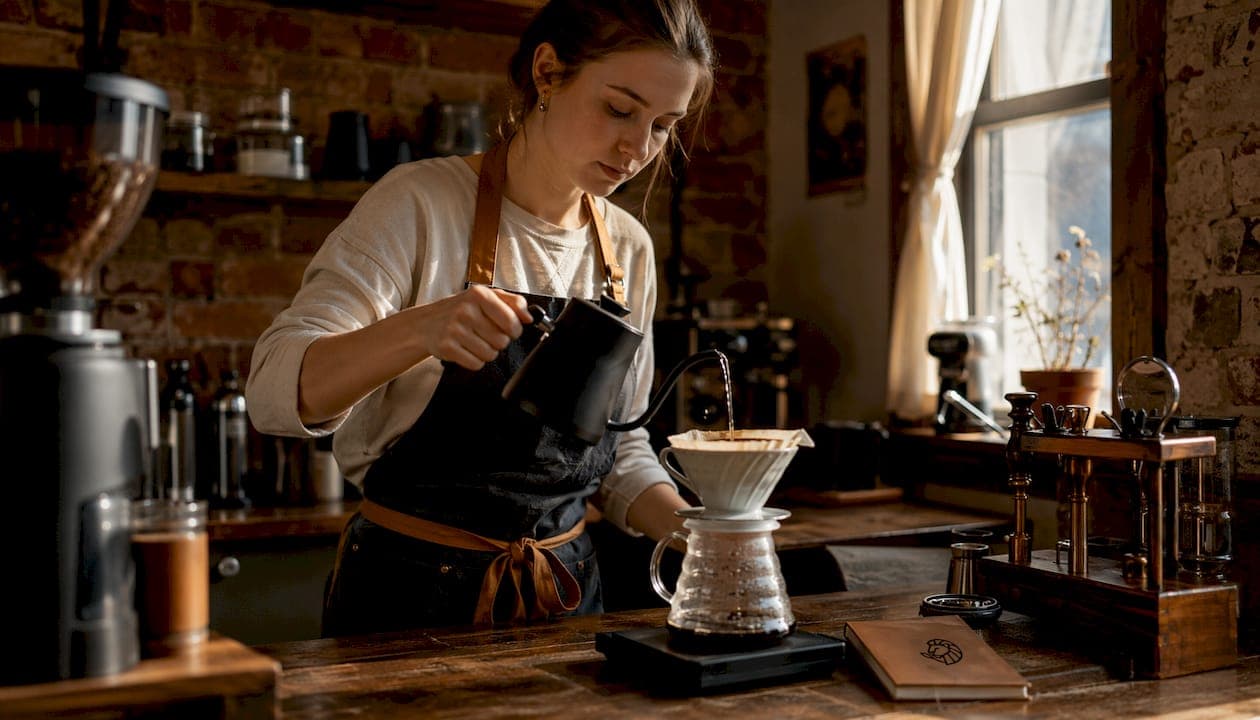
Third wave coffee is a quality- and transparency-driven movement that treats coffee as a craft ingredient rather than a commodity, tracing each cup back to a specific farm, processing method, and roast profile. Trish Rothgeb is widely credited with coining the term, and the Specialty Coffee Association (SCA) provided the institutional framework that gave the movement its grading standards and professional infrastructure. In practice, the movement means lighter roasts designed to highlight origin character, direct sourcing relationships with named producers, and barista education that turns the counter into a classroom.
Quick signs you are looking at a third-wave bag or shop:
- The bag names a specific farm, region, or lot, not just a country.
- A roast date is printed on the bag (not just a "best by" date).
- The processing method (washed, natural, or honey) is listed.
- The menu describes flavor notes by origin character, not just roast level.
TL;DR: Third wave coffee is the movement that turned the cup into a traceable, craft-focused experience, where origin, processing, and preparation are treated with the same seriousness as fine wine.
Table of Contents
- How third wave coffee fits into coffee history
- What actually defines third wave coffee in practice
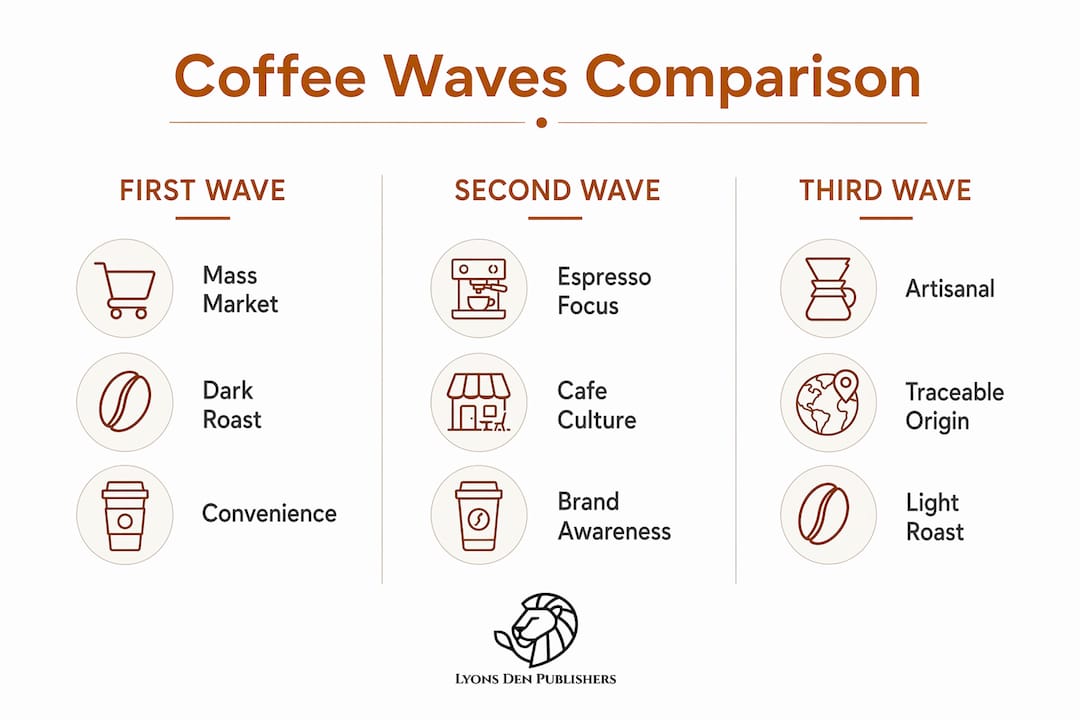
- How the three waves compare
- The U.S. roasters and pioneers who shaped the movement
- How to recognize and taste third wave coffee
- The honest critique of the third wave coffee movement
- Where to find third wave coffee in the United States
- Key Takeaways
- The third wave deserves both its credit and its scrutiny
- Deepen your specialty coffee knowledge with Lyons Den Publishers
- Useful sources and further reading
How third wave coffee fits into coffee history
Coffee history is commonly framed as three distinct waves, each representing a shift in how Americans produced, sold, and consumed coffee.
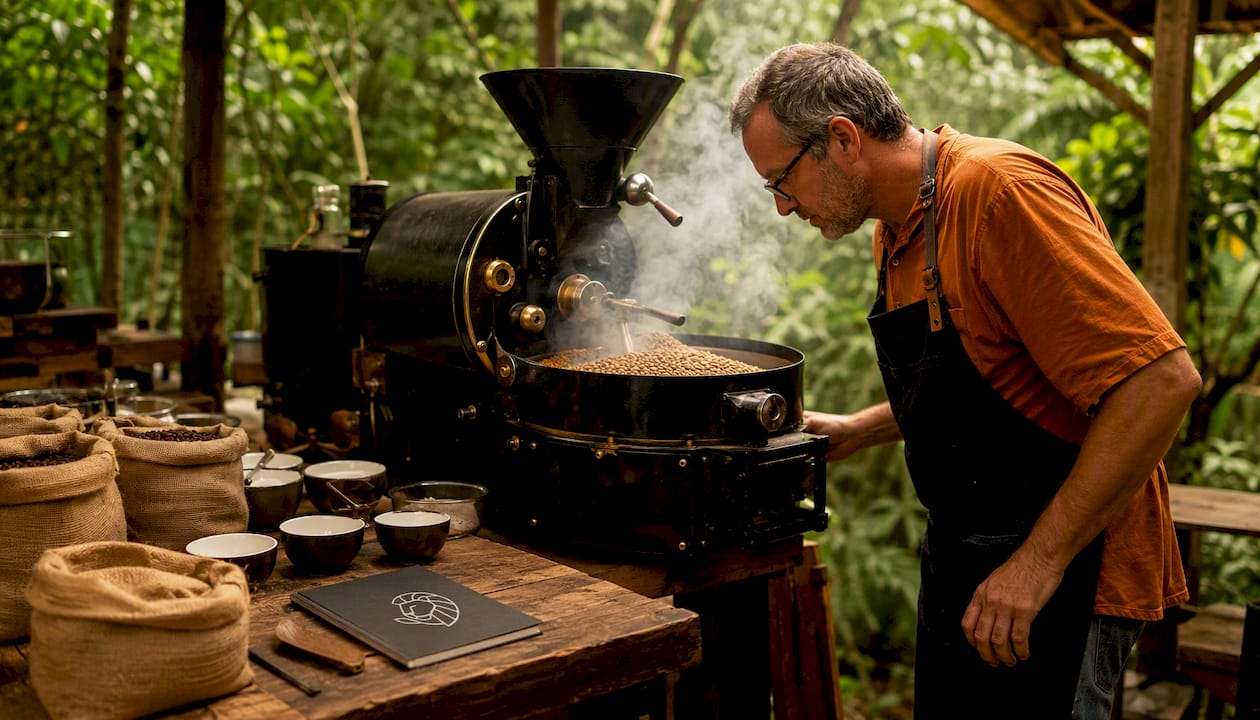
The first wave was about mass convenience. Brands like Folgers and Maxwell House made coffee a household staple through the 19th and 20th centuries, prioritizing consistency and affordability over quality. Flavor was secondary; availability was everything.
The second wave introduced cafe culture and espresso. Peet's Coffee, founded in Berkeley, California, in the late 1960s, began sourcing from artisanal producers and roasting with a focus on country of origin and a signature dark roast profile. Peet's directly inspired the founders of Starbucks, which scaled that model globally. The second wave taught American consumers that coffee could come from Colombia or Ethiopia rather than a generic can, and it popularized espresso-based drinks like lattes and cappuccinos. Starbucks remains the defining second-wave institution with a large global presence.
The third wave emerged as a reaction to that scale. Where the second wave highlighted country of origin and espresso culture, the third wave pushed further: individual farms, specific lots, lighter roasts, and transparent supply chains. The UC Davis Library places the formal coining of the term in 1999, with the movement's roots stretching back to the 1980s.
The term itself has a layered origin. Timothy J. Castle, a specialty coffee broker and author, used the phrase "Coffee's Third Wave" in the December 1999/January 2000 issue of Tea & Coffee Asia. Trish Rothgeb, however, popularized and defined it in a 2003 essay, drawing an explicit parallel to the three waves of feminism. Her framing gave the movement its intellectual identity. By 2005, the term had reached mainstream media through a National Public Radio piece on barista competitions.
The Specialty Coffee Association of America (SCAA), formed in 1982, provided the institutional backbone. It established quality standards, published science-based brewing research under executive director Ted Lingle, and created the "Gold Cup" award for restaurants meeting those standards. In 2017, the SCAA merged with the Specialty Coffee Association of Europe to form the current SCA.
Early geographic centers were the U.S. and Scandinavia. Norwegian roasters, particularly from Oslo, were developing ultra-light roast profiles and direct-trade relationships in parallel with American pioneers, and their influence on competition brewing and roast philosophy spread quickly through the specialty world.
What actually defines third wave coffee in practice
The third wave is not simply about better beans. It is a set of operational practices that run from the farm gate to the cup, and each one is visible if you know where to look.
Core characteristics:
- Single-origin and micro-lot focus. Beans are sourced from a specific farm, cooperative, or lot rather than blended across regions. The goal is to express a place, not to achieve consistency across origins.
- Transparency and direct trade. Roasters publish sourcing details, often including the producer's name, altitude, and the price paid. Direct trade relationships, while not a certified standard, typically involve the roaster visiting the farm and negotiating above commodity prices.
- Light-to-medium roast profiles. Darker roasts mask origin character behind roast flavor. Third-wave roasters use lighter profiles to let the bean's natural acidity, sweetness, and terroir come through.
- Processing detail and terroir emphasis. Whether a coffee is washed, natural, or honey processed dramatically affects its flavor. Third-wave bags name the method because it is part of the cup's story.
- Craft roast profiling. Roasters track rate of rise and development time using data-logging software, treating each roast as a repeatable, documented recipe rather than an intuitive art.
- Precise brewing and barista education. Pour-over, AeroPress, V60, and vacuum siphon are common methods because they give the barista control over every variable: grind size, water temperature, pour rate, and contact time. Baristas in third-wave shops are trained in sensory evaluation, not just drink assembly.
- Sensory language on menus. Flavor notes like "jasmine, bergamot, and stone fruit" describe the bean's origin character, not added flavoring. This language invites the consumer into the evaluation process.
One distinction worth understanding: third wave is a cultural movement, not an industry grade. "Specialty coffee" refers specifically to green beans scoring 80 or more points on the SCA's 100-point scale, assessed by a certified Q-grader. A roaster can sell specialty-grade beans without any third-wave service ethos. Conversely, authentic third-wave shops virtually always use specialty-grade beans, because the movement's sensory goals require that foundation. The two concepts overlap heavily but are not the same thing. Professional credentials in this space, from Q-graders to SCA-certified baristas, are explained in depth at Lyons Den Publishers' guide to coffee expert titles.
Pro Tip: When evaluating a new shop, ask the barista where the coffee is from and when it was roasted. A third-wave shop will answer both questions without hesitation. If the answer is vague or the staff seems irritated by the question, the technical trappings may be there without the educational ethos behind them.
How the three waves compare
The simplest way to see what third wave coffee changed is to compare the three eras across the dimensions that matter most to a coffee buyer. The table below uses category descriptors rather than brand names to keep the comparison structural.
| Dimension | First Wave | Second Wave | Third Wave |
|---|---|---|---|
| Roast style | Dark, uniform, commodity blend | Dark to medium, signature house roast | Light to medium, origin-expressive |
| Sourcing transparency | None; generic commodity | Country of origin named | Farm, lot, producer, and processing method named |
| Flavor focus | Consistency and caffeine | Espresso character, milk-based drinks | Origin terroir, acidity, sweetness, clarity |
| Typical venue | Grocery shelf, diner | Chain cafes, drive-throughs | Roaster-owned cafes, direct-to-consumer online |
| Price / premium | Low; commodity pricing | Moderate; brand premium | High; micro-lot, transparency, and labor premium |
Each wave serves a different consumer need. The first wave delivers affordable, reliable caffeine. The second wave offers a social experience and consistent espresso drinks at scale. The third wave asks the consumer to slow down, pay more, and engage with the cup as a sensory and ethical object. None of these is objectively wrong; they serve different moments and different priorities.
The U.S. roasters and pioneers who shaped the movement
The three roasters most associated with building the third wave in the United States are Intelligentsia Coffee, Stumptown Coffee Roasters, and Counter Culture Coffee, collectively known in the industry as the "Big Three."
- Intelligentsia Coffee (Chicago, founded 1995) was among the first U.S. roasters to formalize direct trade, publishing sourcing relationships and paying above Fair Trade prices. Its training programs and public cuppings set a template for barista education that spread across the industry.
- Stumptown Coffee Roasters (Portland, Oregon, founded 1999) built its reputation on sourcing transparency and a roaster-first model, expanding to multiple cities while maintaining detailed origin documentation. Its Hair Bender blend became one of the most recognized specialty blends in the country.
- Counter Culture Coffee (Durham, North Carolina, founded 1995) distinguished itself through its regional training center model, operating eight centers across the U.S. focused on education rather than retail. Its annual transparency report, which publishes sourcing prices, remains a benchmark for the industry.
- Blue Bottle Coffee (Oakland, California, founded 2002) brought a minimalist aesthetic and single-cup pour-over focus to a wider audience, helping normalize the idea of waiting several minutes for a precisely prepared cup. Its design-forward cafes influenced how third-wave spaces look and feel.
Trish Rothgeb's intellectual contribution was to give the movement a name and a framework that allowed it to be discussed, debated, and taught. Timothy J. Castle's earlier use of the phrase in Tea & Coffee Asia shows the idea was forming across multiple corners of the industry simultaneously.
Starbucks and Peet's Coffee belong to the second wave. Starbucks did invest in a Seattle roastery and tasting room targeting the third-wave market, but its standard cafes use automated espresso machines that require less training than the manual equipment used by third-wave competitors. That gap between the flagship experience and the everyday store is precisely what third-wave critics of Starbucks point to.
A significant caveat: both Intelligentsia and Stumptown were acquired by Peet's Coffee in 2015, which is itself part of JAB Holding Company. That consolidation raised immediate questions about whether the movement's values could survive inside corporate ownership structures, a tension the next section addresses directly.
How to recognize and taste third wave coffee
Whether you are standing at a cafe counter or shopping online, the same checklist applies. Third-wave coffee announces itself through specific, verifiable details.
- Check the roast date. A bag without a roast date is a red flag. Third-wave roasters print the roast date because freshness is part of the product. Coffee is typically at its best between 7 and 21 days post-roast for most brew methods.
- Read the origin information. Country alone is second-wave thinking. Look for a named region, farm, cooperative, or lot. "Ethiopia Yirgacheffe" is a start; "Ethiopia Yirgacheffe, Kochere District, Dumerso washing station, washed process" is third wave.
- Note the processing method. Washed coffees tend toward clarity and brightness; natural process coffees often show fruit-forward sweetness and body; honey process coffees fall between the two. Knowing the method tells you what to expect in the cup before you taste it.
- Look at the roaster's tasting notes. Notes like "lemon verbena, nectarine, brown sugar" describe origin character. Notes like "bold, smooth, rich" describe roast level. The former is third wave; the latter is not.
- Assess the brewing recommendation. Third-wave bags often suggest a specific brew ratio (commonly 1:15 to 1:17 coffee to water by weight) and a water temperature (typically 195°F to 205°F). That specificity signals the roaster has profiled the coffee for a particular extraction.
- Taste methodically. Grind fresh immediately before brewing. Evaluate aroma first, then taste for acidity (brightness, not sourness), sweetness (fruit sugars, not added sugar), body (weight and texture), and aftertaste (how long and how clean the finish is). A well-sourced, lightly roasted coffee will show distinct character in each of these dimensions.
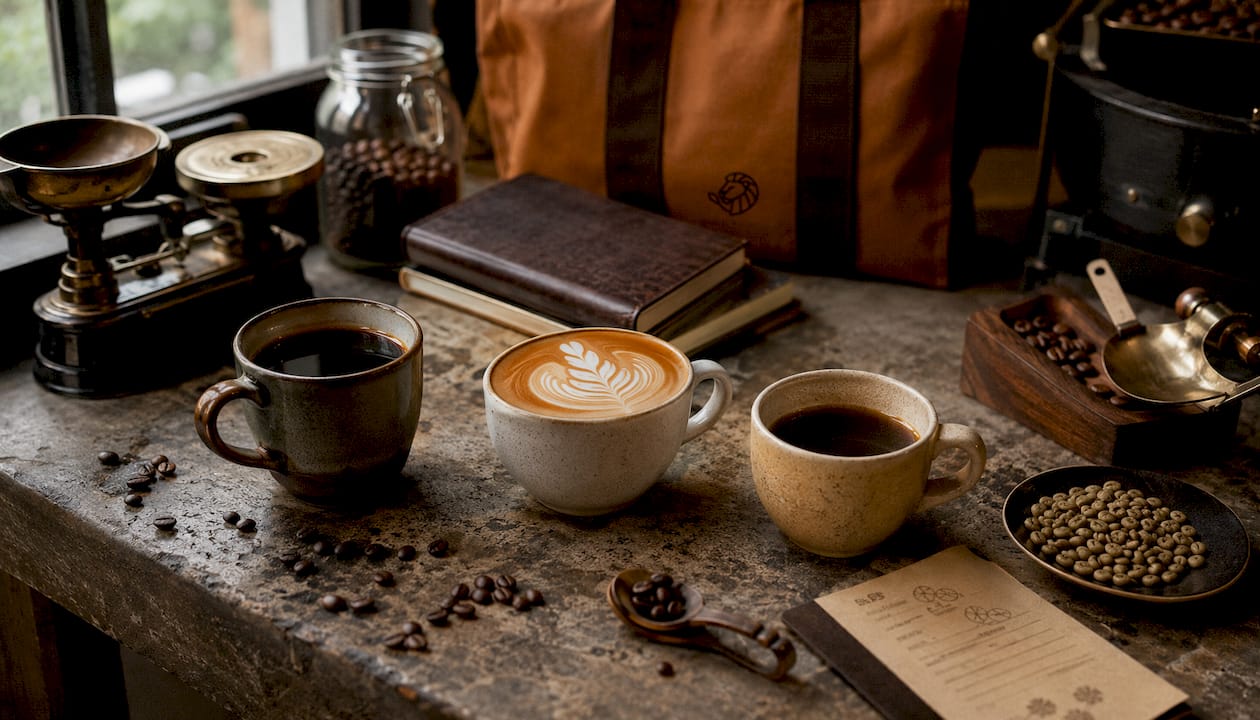
- Compare across origins. The fastest way to develop a palate for third-wave coffee is to brew three single-origin coffees side by side using the same method and ratio. Log the roast date, origin, processing method, and your sensory notes. Patterns emerge quickly.
On pricing: third-wave coffees cost more because the supply chain is more expensive. Micro-lot sourcing, direct-trade premiums, careful processing, and data-driven roasting all add cost. A specialty single-origin bag in the U.S. typically runs $18–$28 per 12 oz., compared to $10–$14 for a commercial specialty blend. That premium reflects real costs, not marketing.
The honest critique of the third wave coffee movement
The third wave has genuine achievements. It raised quality standards, created premium markets for exceptional lots through programs like Cup of Excellence, and made sourcing transparency a competitive expectation rather than a niche value. But the movement has attracted substantive criticism that any informed enthusiast should understand.
Exclusivity and jargon. The sensory vocabulary and technical precision that define third-wave service can be genuinely intimidating. Industry professionals have noted that overly technical, elitist service directly undermines the movement's stated goal of consumer education. A barista who corrects a customer's flavor description rather than engaging with it has missed the point entirely.
Affordability and access. A $7 pour-over is not accessible to most American coffee drinkers. The movement's premium positioning has concentrated its benefits among consumers with disposable income, which sits uncomfortably alongside its stated values of equity and transparency.
Farmer outcomes. Third-wave demand created real opportunities through micro-lot premiums and specialty auctions. But price volatility remains serious for most farmers, and transactional premiums are insufficient to guarantee livelihoods without multi-year contracts or capacity-building support. Paying above Fair Trade prices on a single lot does not constitute a sustainable supply-chain relationship.
Consolidation. The acquisitions of Intelligentsia and Stumptown by Peet's, and Blue Bottle's majority stake sale to Nestlé in 2017, blurred the movement's edges considerably. Whether craft values can survive inside large corporate structures is an open question, and the evidence so far is mixed.
The "fourth wave" debate. Several industry figures, including Rothgeb herself, have argued that the next phase must move beyond consumer education and sensory connoisseurship toward systemic equity: transparent pricing across the supply chain, long-term producer contracts, and measurable improvements in farmer incomes. What to watch for as credible signs of that shift: published farm-gate prices, multi-year sourcing commitments, and investment in processing infrastructure at origin, not just premium payments at auction.
For a broader look at how coffee brands are approaching sustainability commitments today, the Moustache Coffee Club's sustainability overview offers a useful external perspective.
Where to find third wave coffee in the United States
Third-wave coffee is more accessible in the U.S. than it has ever been, but knowing where to look still matters.
- Roaster-owned cafes. The most reliable third-wave experience comes from cafes that roast their own coffee on-site or at a nearby facility. The roaster-to-cup chain is short, and staff are typically trained in the sourcing story as well as the brewing method.
- Micro-roaster online stores. Many of the best third-wave roasters in the U.S. sell direct-to-consumer with detailed bag notes, roast dates, and origin documentation. Buying online from a micro-roaster with a published transparency report is often more reliably third-wave than visiting a larger chain's "premium" offering.
- Cupping events and tasting flights. Public cuppings, offered by roasters and specialty shops, are the fastest way to develop a palate and learn the sensory vocabulary. Many third-wave shops host weekly or monthly cuppings that are free or low-cost.
- Farmers' market stalls. In many U.S. cities, local micro-roasters sell at farmers' markets, which allows you to taste before buying and ask sourcing questions directly.
- Specialty coffee festivals. Events like the SCA's annual Expo bring together roasters, producers, and educators in one place, with tasting opportunities across hundreds of lots.
Buyer's checklist for online orders:
- Roast date visible on the product page (not just "best by").
- Single-origin or micro-lot labeling with named farm or cooperative.
- Processing method listed.
- Freshness or return policy stated.
- Shipping time noted relative to roast date (ideally ships within a few days of roasting).
Key Takeaways
Third wave coffee is a quality-focused movement built on traceable sourcing, light-to-medium roasting, and consumer education, and understanding its core practices lets you evaluate any bag or cafe with confidence.
| Point | Details |
|---|---|
| Definition and origin | Trish Rothgeb coined the term in 2003; Timothy J. Castle used it first in 1999 in Tea & Coffee Asia. |
| Core practices | Single-origin sourcing, named processing method, light roast, direct trade, and sensory education at the counter. |
| How to spot it | Look for a roast date, farm name, processing method, and origin-character tasting notes on the bag or menu. |
| Honest critique | Consolidation, affordability gaps, and unresolved farmer income issues remain the movement's most serious weaknesses. |
| Lyons Den Publishers | The Complete World of Coffee and Lyons Den Publishers' coffee history resources cover the full wave framework with sourced historical detail. |
The third wave deserves both its credit and its scrutiny
The third wave coffee movement accomplished something genuinely difficult: it persuaded a large segment of American consumers to care about where their coffee came from and how it was prepared. That shift in consumer expectations raised the floor for quality across the industry, not just at specialty shops.
What the movement has not fully resolved is the gap between its stated values and its structural realities. Paying a premium for a micro-lot is not the same as guaranteeing the farmer a living wage. Publishing a sourcing story on a bag is not the same as a multi-year contract that gives a producer the financial stability to invest in quality. The most credible third-wave operators know this distinction and are working toward the latter. The least credible ones use the language of transparency as a marketing tool while maintaining transactional relationships that differ from commodity buying only in price.
For the curious enthusiast, the most useful posture is informed appreciation: recognize what the movement built, understand where it falls short, and use that knowledge to support the roasters who are genuinely doing the harder work. The craft behind the counter matters, but so does what happens long before the barista picks up the kettle.
Deepen your specialty coffee knowledge with Lyons Den Publishers
The third wave coffee movement sits at the intersection of history, science, and culture, and understanding it fully means going deeper than any single article can take you.
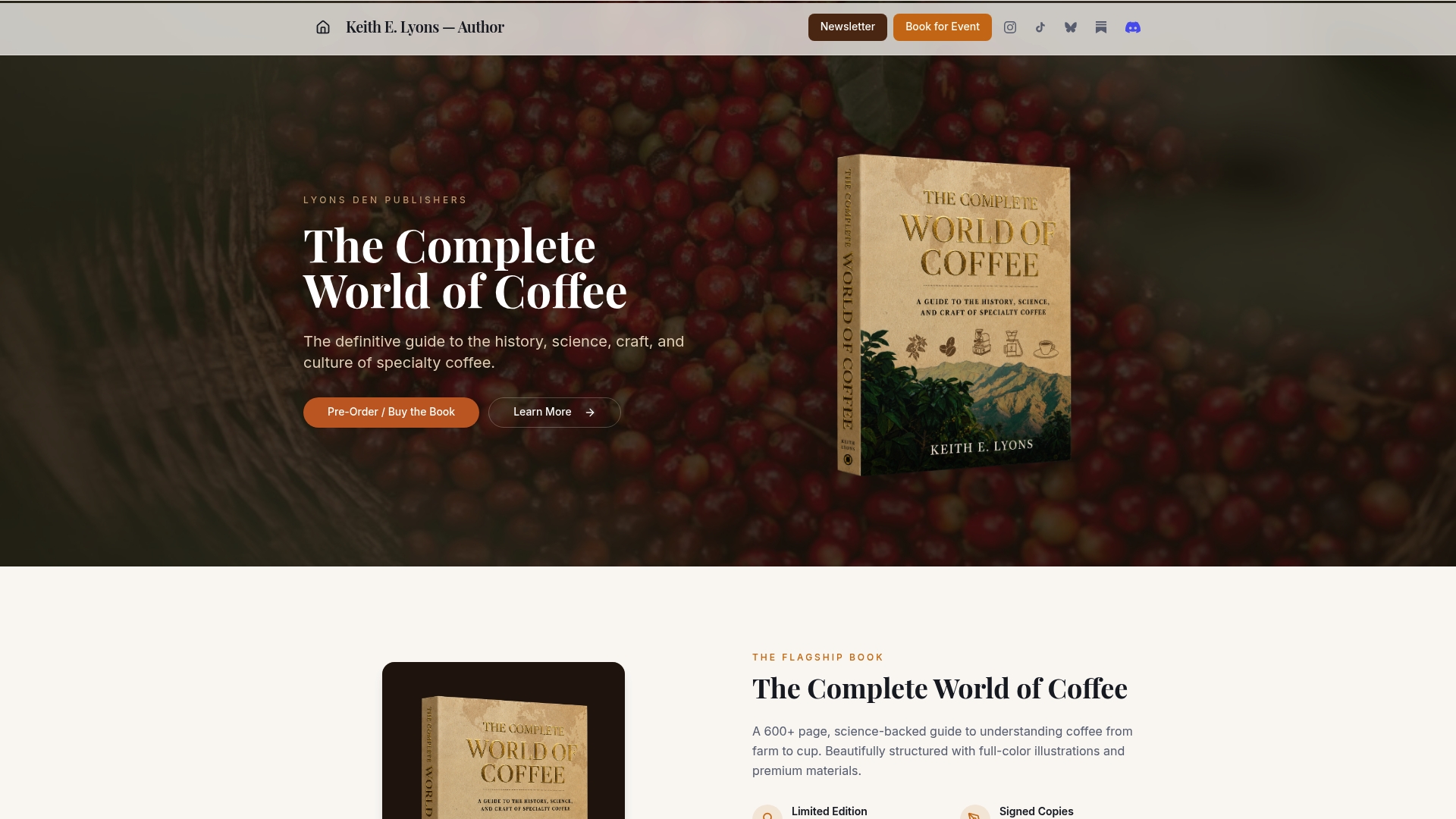
The Complete World of Coffee by Keith Lyons covers the full arc from first-wave commodity culture through the specialty revolution, with dedicated chapters on sourcing, processing, roast science, and sensory evaluation. Lyons Den Publishers' coffee science resources include practical exercises in roast profiling, extraction theory, and tasting methodology that translate directly into better decisions at the bag and the brew station. The specialty coffee history section provides the sourced historical narrative behind the wave framework covered here. Whether you are a home brewer building a palate or a barista preparing for professional certification, the resources at Lyons Den Publishers give you a structured, evidence-based path forward. Start with the coffee science hub and work outward from there.
Useful sources and further reading
The sources below support the claims in this article and offer reliable starting points for deeper study.
| Source | Why it's useful |
|---|---|
| Trish Rothgeb, "The Third Wave Coffee Question" (Substack) | Primary source from the term's popularizer; covers origins, ethos, and her current thinking on what the next phase must address. |
| Third-wave coffee, Wikipedia | Well-sourced overview of the movement's history, key players, and institutional context; good starting point for timeline research. |
| UC Davis Library: The Third Wave of Coffee | Academic exhibit with historical context on the SCAA, Gold Cup standards, and the movement's institutional roots. |
| Eater: "What Is Third Wave Coffee and How Did We Get Here?" | Detailed media history covering consolidation, acquisitions, and the tensions between craft identity and corporate ownership. |
| Los Angeles Times: Trish Rothgeb profile | Profiles Rothgeb's role in coining the term and her perspective on inclusivity and the movement's cultural reach. |
| Perfect Daily Grind: "What Is Third Wave Coffee?" | Industry-focused explainer emphasizing the hospitality and education dimensions that separate genuine third-wave service from technical performance. |
| BrewFYI: The Third Wave Coffee Movement | Practical operational overview of third-wave characteristics, roast profiling, and what to look for in a shop or on a bag. |
| Lyons Den Publishers: Coffee History | In-depth historical chapters on the specialty coffee revolution and the wave framework, with sourced narrative context. |
| Lyons Den Publishers: Coffee Processing Methods | Core reference for understanding washed, natural, and honey processing and their flavor implications. |
For readers who want a fully integrated reference, The Complete World of Coffee by Keith Lyons covers all of these topics in a single, citation-backed volume, from the history of the specialty movement to the science of extraction and sensory evaluation.