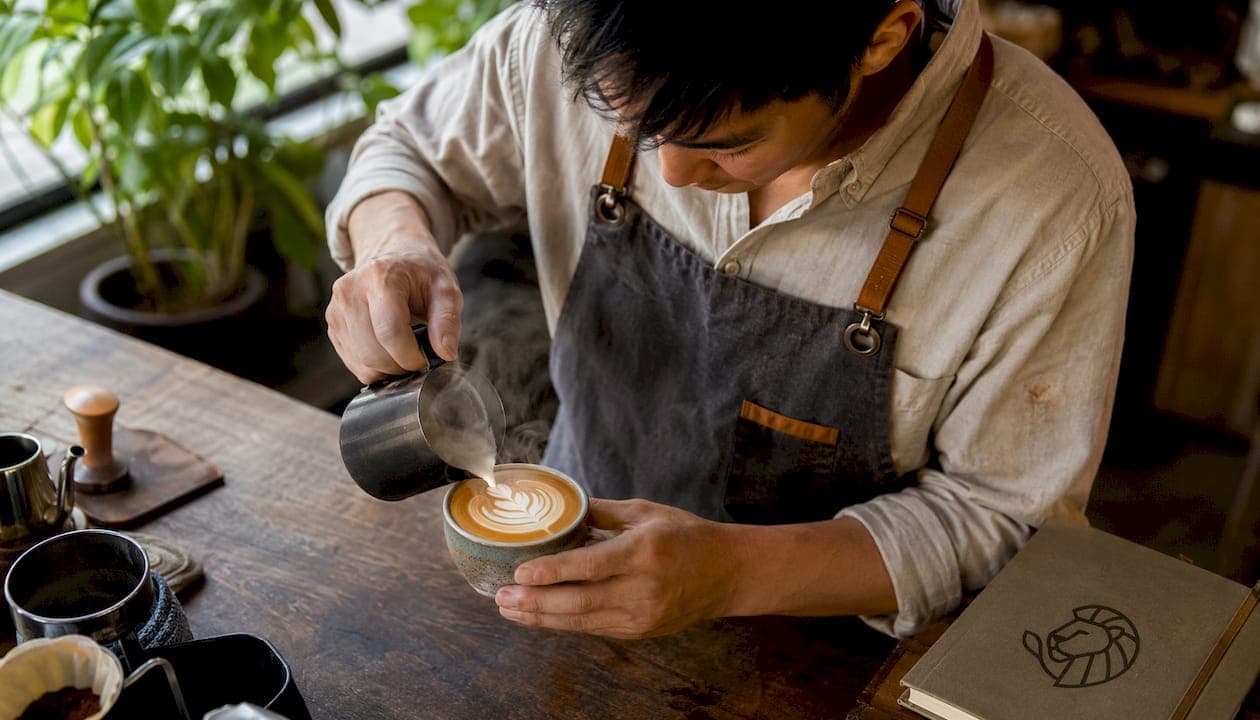
Slinging coffee is not a casual phrase. It describes the fast, skilled practice of preparing and serving coffee at high volume, where workflow mastery matters as much as brewing technique. The term entered American coffee-industry slang as a way to distinguish the transactional, time-pressured work of a busy bar from the slower, more contemplative act of crafting a single cup. A barista slinging coffee manages a POS system, assembles drinks in sequence, reads the room, and keeps a line moving, all without letting quality slip.
What separates slinging from general brewing:
- Speed under pressure: Drinks must be consistent whether the shop has two customers or twenty.
- Workflow sequencing: Knowing which task to start, pause, and hand off simultaneously.
- Customer management: Remembering names, preferences, and tone, even during a rush.
- POS fluency: Accurate order entry at pace, with no hesitation.
Table of Contents
- How slinging coffee shapes specialty coffee culture
- How to excel at coffee service and manage the real challenges
- Where to go deeper on specialty coffee education
- Notable coffee slingers worth knowing
- How coffee service differs across café types and regions
- Key Takeaways
- The craft that rarely gets its due
How slinging coffee shapes specialty coffee culture
Specialty coffee shops depend on skilled service at the bar as much as they depend on sourcing exceptional beans. The two are inseparable. A beautifully roasted single-origin Ethiopian falls flat if it is pulled incorrectly, served cold, or handed to the wrong customer. The person behind the bar is the final link in a supply chain that may span thousands of miles.
Independent specialty roasters play a direct role in raising bar standards. When multiple specialty roasters operate in the same city, cafes cannot afford complacency. Candy and Isaac Williams of Coffee Slingers Roasters in Oklahoma City have noted that local competition improves quality across the board, pushing every shop to sharpen its sourcing, roasting, and service.
The economic ripple extends further than the café counter. Specialty operators who maintain direct relationships with farms support sustainable livelihoods at origin. Coffee Slingers Roasters, for example, pursues vertical integration from farm to cup, treating community engagement as a core business value rather than a marketing note.
How to excel at coffee service and manage the real challenges
Mastering high-volume coffee service requires more than a good palate. The operational layer is where most cafes succeed or fail.
- Learn customers before they ask. Specialty cafe owner Andy Anderson advises learning regulars' names and drinks before they reach the register. That single habit builds loyalty faster than any loyalty card program.
- Write and enforce SOPs. Standard Operating Procedures with on-shift checklists assign specific responsibilities for opening, equipment cleaning, and prep. Without them, tasks fall through the gaps during busy periods.
- Fix the layout, not the machine. The true bottlenecks in busy cafes are usually at the POS and the handoff counter, not the espresso machine. Separating grab-and-go orders from made-to-order drinks reduces staff movement and cuts wait times.
- Plan for slow seasons deliberately. Burnout is a serious and under-recognized risk. Proactive operators set aside funds during peak months, schedule deep cleaning, run staff training, and develop new menu items during slow periods rather than simply enduring them.
- Assign roles, not just tasks. During a rush, every team member needs a defined position. Floating without a role creates collisions, delays, and errors.
- Control quality at the source. Dialing in grind settings at the start of each shift, checking milk temperatures, and tasting espresso before service opens are non-negotiable habits for any serious operation.
- Protect your team. High turnover is expensive. Cafes that invest in staff wellbeing, fair scheduling, and genuine recognition retain skilled people and maintain the consistency customers return for.
Pro Tip: Run a brief pre-shift huddle of two to three minutes. Confirm the day's specials, flag any equipment issues, and assign bar positions before the first customer walks in. It takes less time than fixing a preventable mistake mid-rush.
Where to go deeper on specialty coffee education
Slinging coffee well is the visible expression of a much larger body of knowledge. The craft connects to sourcing, roasting science, sensory evaluation, and the history of coffee culture across continents.
- The Complete World of Coffee by Keith Lyons covers the full arc from cultivation and processing through brewing, espresso, and sensory analysis, giving both enthusiasts and professionals a single authoritative reference.
- Lyons Den Publishers offers virtual and in-person educational sessions covering brewing instruction, staff training, and group events for cafes and coffee professionals.
- Curated coffee education bundles from Lyons Den Publishers bring together books, guides, and tools suited to every stage of coffee learning.
Notable coffee slingers worth knowing
Candy and Isaac Williams built Coffee Slingers Roasters in Oklahoma City around direct farm relationships and small-batch roasting. Their approach treats local competition as a quality driver rather than a threat, a philosophy that has made them a recognized voice in the American specialty coffee community.
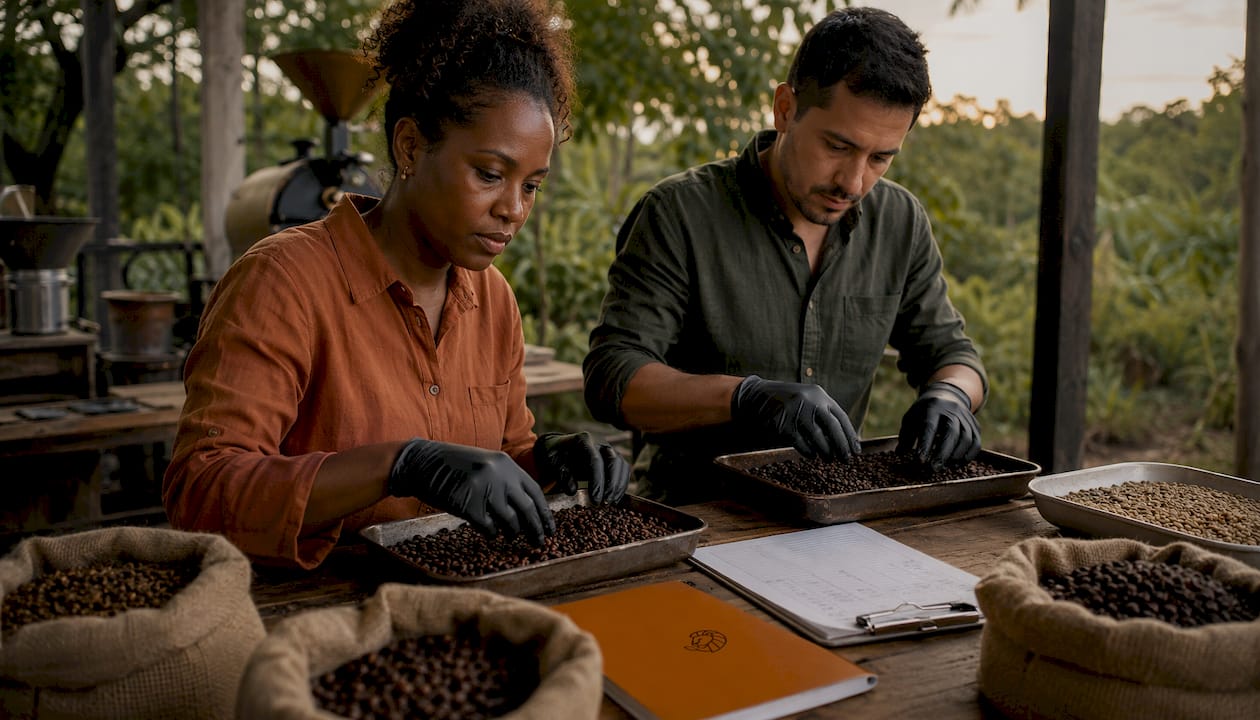
Andy Anderson, whose operational advice has been featured in specialty trade publications, represents a generation of café operators who treat customer relationships as a core business skill. His insistence on knowing regulars before they ask reflects a broader truth: the best coffee service feels personal, not transactional.
These operators share a common thread. They treat the bar not as a production line but as a point of genuine connection, and they back that philosophy with rigorous operational discipline.
How coffee service differs across café types and regions
The demands of slinging coffee shift considerably depending on the setting.
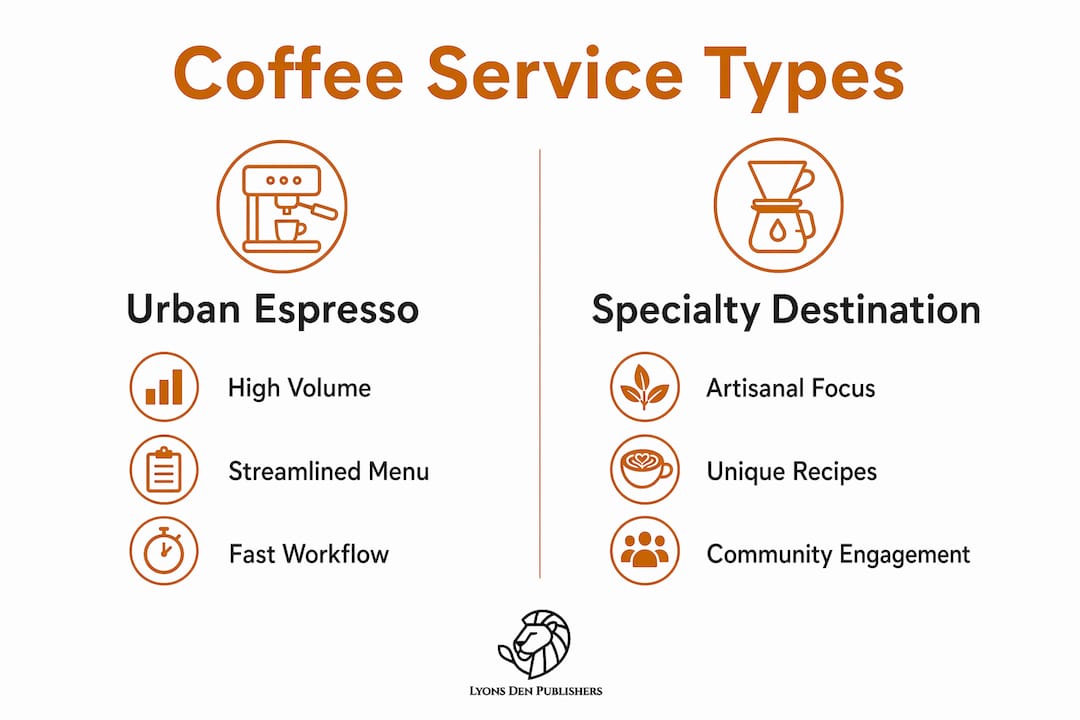
A high-volume urban espresso bar in New York or Chicago prioritizes throughput. Menus are tight, workflows are choreographed, and speed is the primary measure of success. Baristas here develop extraordinary efficiency but may have limited time for extended customer conversation.
A specialty destination café in a smaller market, such as those found in cities like Oklahoma City or Asheville, often operates at a more deliberate pace. The bar becomes a place for education as much as service, with staff explaining origins, processing methods, and brew choices to curious customers.
Drive-through coffee operations, common across the Pacific Northwest and increasingly popular nationwide, demand a different skill set entirely. The interaction window is under sixty seconds, making drink sequencing and order accuracy the dominant skills.
Home coffee enthusiasts who sling coffee for guests occupy their own category. The pressure is social rather than commercial, but the principles hold: consistency, preparation, and genuine attention to the person you are serving.
Key Takeaways
Slinging coffee is a skilled, high-velocity practice that demands workflow mastery, customer awareness, and operational discipline in equal measure.
| Point | Details |
|---|---|
| Slinging is a specialized skill | It combines speed, POS fluency, drink sequencing, and customer management under time pressure. |
| SOPs prevent service failure | Checklists and assigned roles during opening and peak periods maintain consistency and prevent bottlenecks. |
| Layout matters more than machines | Most café delays occur at the POS and handoff counter, not at the espresso machine. |
| Burnout requires proactive planning | Setting aside funds and scheduling training during slow months sustains teams long-term. |
| Local competition raises standards | Multiple specialty roasters in one market drive quality improvements that benefit the whole community. |
The craft that rarely gets its due
The popular image of a barista is someone who makes beautiful latte art and talks about terroir. The reality of slinging coffee is less photogenic and more demanding. It is a discipline built on preparation, repetition, and the ability to hold quality constant when everything around you is moving fast.
What strikes me most, having spent years studying and writing about specialty coffee, is how rarely the operational layer gets serious attention. Coffee education tends to focus on the sensory and the scientific: extraction curves, water chemistry, varietal differences. Those things matter enormously. But a café that cannot move efficiently through a morning rush will not survive long enough to showcase its sourcing.
The best coffee professionals understand both sides. They can describe the difference between a washed and a natural process, and they can also run a bar position for four hours without a single drink going to the wrong customer. That combination is rarer than it should be, and it deserves more recognition than it typically receives.