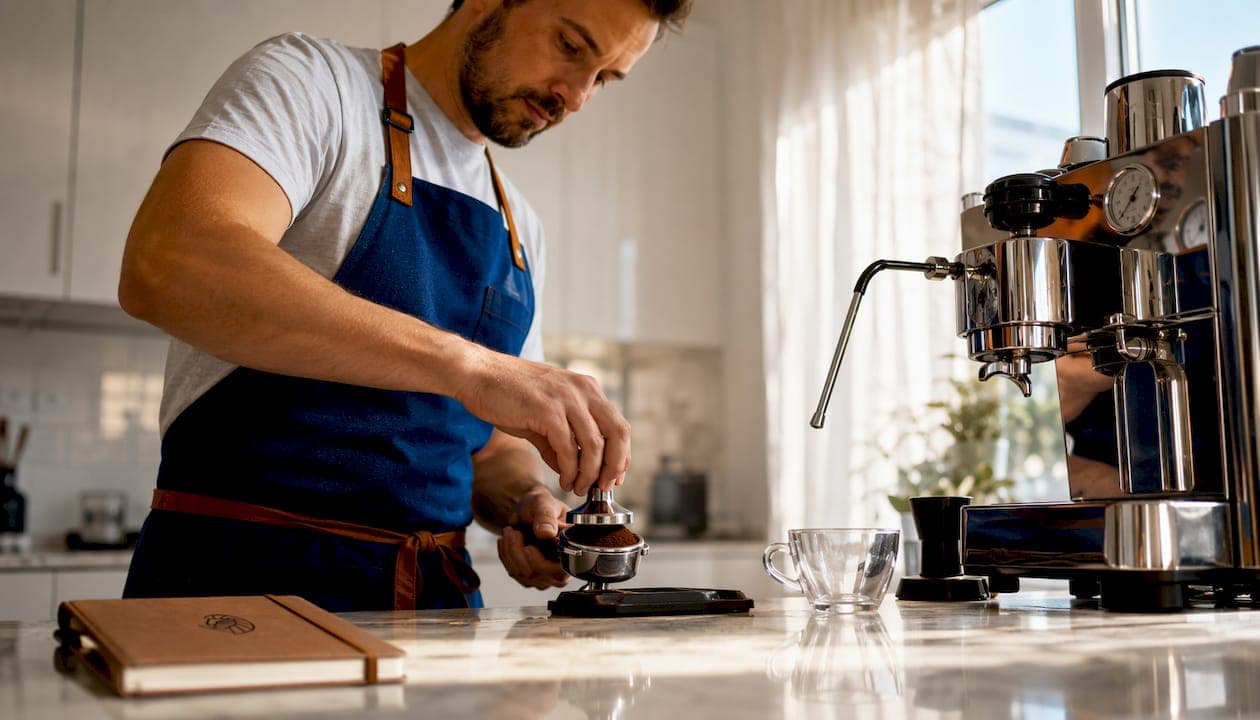
A sour espresso almost always means under-extraction. Grind finer, check that your shot runs 25–30 seconds, and confirm your yield lands near a 1:2 ratio. Those three adjustments resolve the majority of sour shots at home.
Before pulling another shot, run through these checks in order:
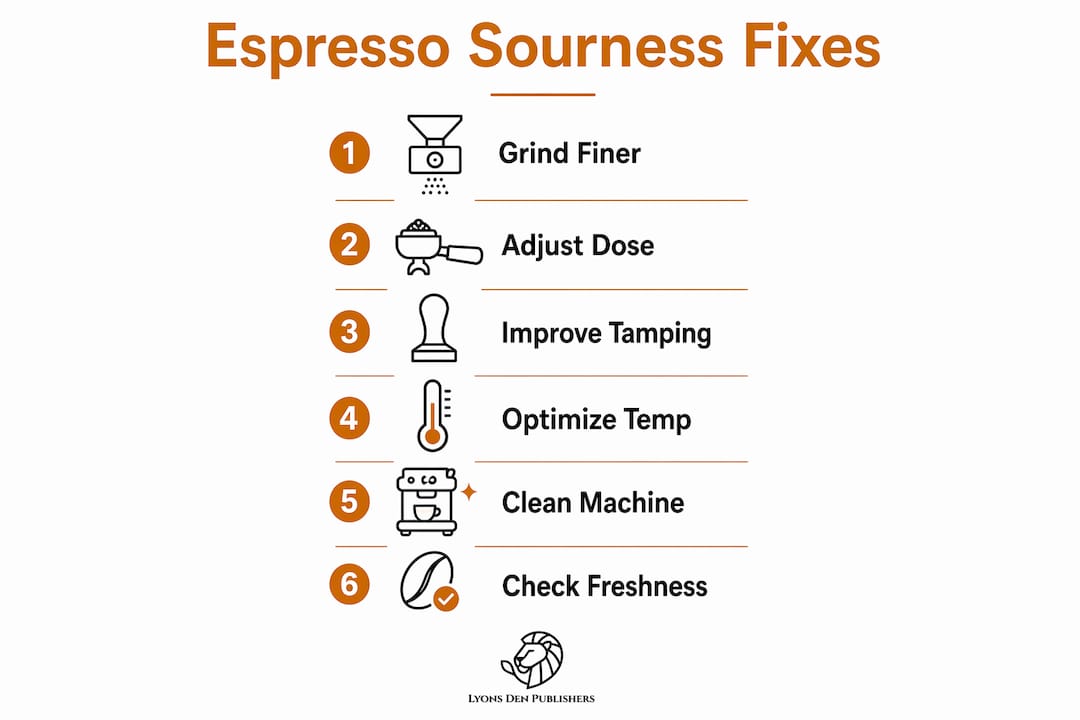
- Grind finer by one step. This is the single most effective first move.
- Time your shot. Anything under 25 seconds is running too fast.
- Weigh your yield. A short yield cuts the shot before sweetness develops.
A common starting recipe used by home baristas involves dosing and yield ratios typical of the 1:2 range and timing shots in the mid-20 second range. If your shot falls outside typical timing or yield ranges, that discrepancy is your diagnosis.
Table of Contents
- Why is my espresso sour? Understanding the sensory difference
- Common technical causes of sour espresso and what they look like in the cup
- How to troubleshoot sour espresso one variable at a time
- Puck prep, distribution, tamping, and channeling: the mechanical fixes
- Machine temperature, pressure, water chemistry, and maintenance
- Bean factors: roast level, age, and the freshness window
- What specialty coffee research says about extraction and sourness
- Quick-reference cheat sheet for sour espresso fixes
- Key Takeaways
- The habits that actually prevent sour espresso
- Deepen your espresso knowledge with Lyons Den Publishers
- Further reading and sources
Why is my espresso sour? Understanding the sensory difference
Not every sharp or bright note in a cup is a problem. Espresso naturally contains organic acids, and a well-extracted shot can carry clean citrus or stone-fruit brightness that is entirely intentional. The question is whether that brightness is balanced by sweetness and body, or whether it stands alone.
Pleasant acidity is supported by sweetness. It feels integrated, and the finish lingers. Sourness, by contrast, arrives as a quick, puckering hit with very little sweetness behind it. The finish drops away instead of building. That disconnected quality is the clearest signal of under-extraction.
The reason comes down to extraction sequence. Organic acids dissolve first, followed by sugars and sweet compounds, and finally the heavier bitter and body-contributing compounds. A shot that stops too early captures the acids but misses the sweetness that would make them pleasant. The result is a cup that feels sharp, thin, and incomplete.
Pro Tip: Taste your shot immediately and ask two questions: Is there any sweetness present? Does the finish linger or collapse? If sweetness is absent and the finish drops quickly, you are tasting under-extraction, not natural acidity. Use the coffee flavor wheel to identify specific descriptors and track your adjustments.
Common technical causes of sour espresso and what they look like in the cup
Most sour shots trace back to one of seven causes. Working through them in priority order prevents wasted changes.
| Cause | What you notice | Why it happens | First step to test |
|---|---|---|---|
| Grind too coarse | Fast shot, thin body, sharp sourness | Low resistance lets water pass before sweetness extracts | Grind 1–2 steps finer |
| Shot running too fast | Under 25 seconds, low yield | Water contact time too short | Grind finer; time the next shot |
| Brew temperature too low | Consistent sourness across grind settings | Cool water lacks energy to dissolve sugars | Flush group head; raise temp 1–2°C |
| Dose too small or yield too short | Intense sourness, thin mouthfeel | Less resistance; shot cuts before sweetness develops | Weigh dose and yield; target 1:2 |
| Puck prep or channeling | Sour and bitter in the same shot; erratic results | Uneven water flow extracts some zones too little, others too much | Improve distribution and tamp |
| Bean age or roast level | Sourness that technique cannot fix | Stale or very fresh beans; light roasts are less soluble | Check roast date; rest beans 7–10 days |
| Water chemistry or dirty machine | Persistent sharpness despite correct parameters | Soft water lacks buffering; scale or residue alters flow | Test water; clean group head and screen |
Light roasts are denser and less soluble than medium or dark roasts, which makes them more likely to taste sour unless brew parameters are specifically adjusted. That is not a defect in the bean; it is a solubility characteristic that requires a targeted response.
How to troubleshoot sour espresso one variable at a time
The most common mistake home baristas make is changing grind, dose, and temperature simultaneously. When three things change at once, there is no way to know which one worked. A consistent diagnostic sequence grind first, then dose and yield, then temperature produces faster and more reliable results.
Ordered troubleshooting checklist:
- Lock your dose (18 g for a standard double basket) and target yield (36 g). Do not change these yet.
- Pull a shot and time it. Record the result.
- If the shot runs under 25 seconds and tastes sour, grind 1–2 steps finer.
- Pull again. Repeat until the shot is within common timing guidelines.
- If timing is now correct but sourness persists, check your puck prep (see the next section).
- If puck prep looks clean, raise brew temperature by 1–2°C and pull again.
- If sourness remains after all of the above, evaluate bean condition and water chemistry.
Sample recipe targets:
| Basket size | Dose (in) | Yield (out) | Target time | Ratio |
|---|---|---|---|---|
| Single | 18 g | 18 g | 25–30 s | 1:2 |
| Standard double | 18 g | 36 g | 25–30 s | 1:2 |
| Larger double | 20 g | 36 g | 25–30 s | 1:2 |
| Light roast double | 18 g | 36 g | 25–30 s | 1:2.2–2.5 |
Decision tree:
- Shot noticeably under common timing ranges and sour → grind finer.
- Shot in typical timing range and still sour → check puck prep and channeling.
- Shot in typical timing range, puck prep clean, still sour → raise temperature slightly.
- Shot timing correct, temperature raised, still sour → evaluate bean freshness and water.
- Shot sour and bitter simultaneously → channeling is the likely cause; fix distribution and tamp.
The extraction chart published by Lyons Den Publishers provides a visual reference for where your shot falls on the under-to-over-extraction spectrum, which makes it easier to confirm a diagnosis before adjusting.
Pro Tip: Keep a simple log: dose in, yield out, shot time, and a one-word taste note. After three or four shots, patterns become obvious. A scale accurate to 0.1 g is the single most useful tool for this process.
Puck prep, distribution, tamping, and channeling: the mechanical fixes
Channeling is one of the most frequently overlooked causes of sour espresso, and it is also one of the most confusing because it can produce a shot that looks normal on the timer while tasting both sour and bitter. When water finds a fast path through the puck, some zones extract very little while the channel itself becomes over-extracted. The cup reflects both extremes at once.
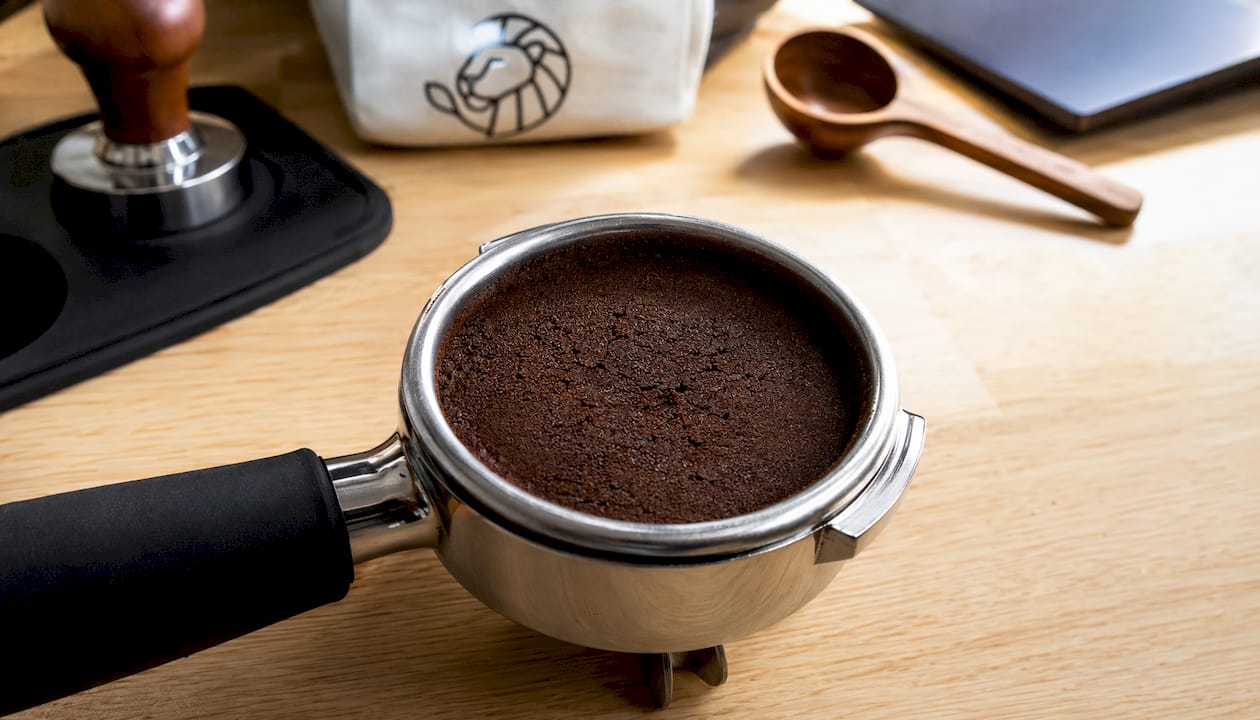
The fix is mechanical, not a recipe change. WDT (Weiss Distribution Technique), leveling, and a flat tamp address the root cause by ensuring water meets consistent resistance across the entire puck.
Practical sequence:
- Grind into the portafilter or a dosing cup. Clumps form during grinding and create uneven density.
- WDT. Use a fine needle tool to stir through the grounds and break up clumps before leveling.
- Distribute and level. Use a distribution tool or the side of your finger to create a flat, even bed.
- Tamp flat. Apply firm, even pressure straight down. The goal is a level surface, not maximum force.
Diagnostic signs of channeling include uneven streams from the spouts, a shot that blonds (turns pale) suddenly and early, and results that vary shot to shot even when the recipe stays constant. Shot-to-shot inconsistency often indicates distribution or grinder problems rather than a recipe issue, and improving puck prep frequently resolves it without any equipment upgrade.
Basket fit also matters. A basket that is too large for the dose leaves the puck thin and prone to uneven extraction. Match your dose to the basket's rated capacity and check that the puck surface is not more than a few millimeters below the basket rim after tamping.
Machine temperature, pressure, water chemistry, and maintenance
Temperature is the second most powerful lever in espresso extraction after grind size. When brew water is too cool, it lacks the energy to dissolve sugars and heavier compounds, leaving acidity unsupported. The ideal brew temperature range is 195–205°F (90–96°C) measured at the puck. Machines without a PID controller can drift significantly from their set point, particularly during the first shot of the day or between back-to-back pulls.
Practical temperature checks and fixes:
- Flush the group head before each shot. Running a blank shot purges cooled water that has been sitting in the head.
- Allow full warm-up time. Most home machines need 15–20 minutes to stabilize, not just the time for the ready light to appear.
- PID machines: raise the set temperature by 1–2°C if sourness persists after grind and puck prep are dialed in.
- Non-PID machines: use a temperature surfing technique (timing the flush) to hit a more consistent extraction temperature.
Water chemistry plays a quieter but equally real role. Bicarbonate acts as a buffer that softens perceived acidity. Very soft water, low in bicarbonate, makes espresso taste sharper because there is nothing to moderate the acids. Very hard water carries scaling risk and can eventually restrict flow through the group head. For home espresso, water in the moderate range, roughly 50–150 ppm total dissolved solids with meaningful bicarbonate, tends to produce the most balanced extraction. Third-wave water products such as Third Wave Water or filtered tap water tested with an inexpensive TDS meter are practical starting points. For a deeper treatment of this topic, the water chemistry resource at Lyons Den Publishers covers buffering, mineral targets, and practical filtration options.
Maintenance checklist:
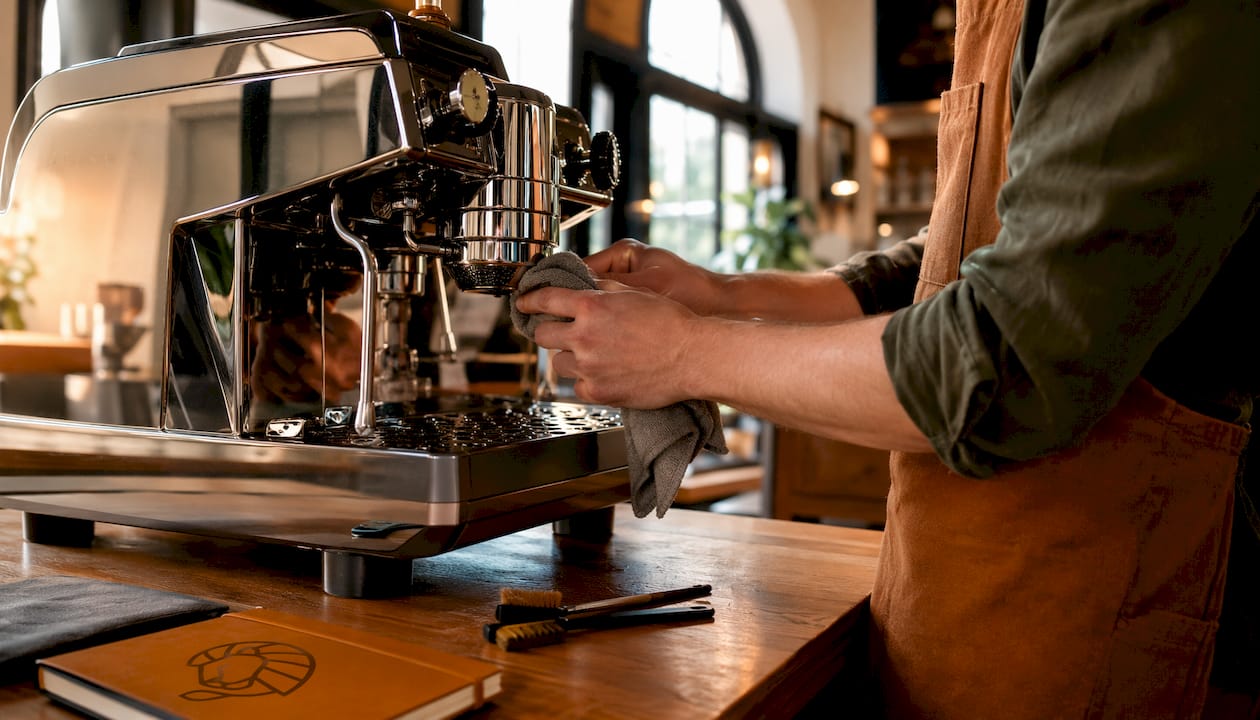
- Backflush the group head with a blind basket and group head cleaner weekly.
- Remove and scrub the shower screen monthly.
- Inspect and replace the group head gasket if you notice leaks or resistance when locking the portafilter.
- Clean the grinder burrs every two to four weeks, depending on use volume.
A dirty machine is a genuine cause of off flavors. Rancid coffee oils on the shower screen or in the group head add bitterness and can mask or amplify sourness.
Bean factors: roast level, age, and the freshness window
Beans are often the limiting factor when technique is solid but the shot still tastes sour. Two opposite conditions cause the same symptom: beans that are too fresh and beans that are too old.
Very fresh beans, under roughly seven days from roast, release CO₂ at a rate that disrupts water flow through the puck. The gas creates uneven resistance, leading to erratic extraction that can read as sharp or gassy sourness even when every other parameter is correct. Resting beans for 7–10 days after roast resolves most of this behavior.
Stale beans, typically more than three to four weeks past roast, lose aromatic compounds and sweetness potential through oxidation. The cup tastes flat and thin, which can be misread as sourness. No amount of grind adjustment recovers sweetness that has already degraded.
Roast level adds another layer. Light roasts retain more of the bean's natural organic acids because less is driven off during roasting. They are also denser and less soluble, which means they require more extraction energy to develop sweetness. For home espresso, light roasts often benefit from a slightly higher brew temperature, a finer grind, and a longer yield (closer to 1:2.2–1:2.5) compared to a medium roast at the same dose.
Bean shopping and storage checklist:
- Buy whole beans with a printed roast date, not a best-by date.
- Target beans roasted 7–21 days before your brew date for espresso.
- Choose a roast level that matches your machine's capability. Light roasts reward machines with precise temperature control.
- Store in an airtight container with a one-way valve, away from heat, light, and moisture.
- Grind only what you will use in a single session.
- Check coffee packaging features that preserve freshness, particularly one-way degassing valves and resealable closures, when evaluating a new roaster's bags.
Processing method also influences baseline acidity. Washed coffees tend toward cleaner, brighter acidity, while natural and honey-processed lots often carry more fruit-forward sweetness. Understanding how processing affects flavor helps set realistic expectations before you start adjusting parameters.
What specialty coffee research says about extraction and sourness
The practitioner consensus on sour espresso is consistent and well-documented. Grind size is the primary lever because it controls both surface area and resistance, which together determine how long water stays in contact with the coffee bed. Adjusting grind before touching any other variable is the most efficient path to a balanced shot because it directly addresses the most common cause of under-extraction.
The 25–30 second timing target is not arbitrary. It reflects the window in which, for a standard 1:2 recipe, enough sweetness and body typically dissolve to balance the acids that extract first. A shot that finishes in 18 seconds has almost certainly not reached that stage. One that runs 45 seconds has likely over-extracted and will taste bitter. The target is a range, not a fixed number, and it interacts with grind, dose, and yield simultaneously.
CO₂ behavior in fresh beans adds a variable that timing alone cannot account for. During the first days after roast, CO₂ escaping from the grounds creates turbulence in the puck that disrupts even water flow. This is why a shot can look normal on the timer and still taste sour: the timer measures time, not extraction evenness. Resting beans until degassing slows makes extraction more predictable and the timing target more meaningful.
When a shot already runs in the 25–30 second window but still tastes sour, the most productive next steps are checking puck prep for channeling and raising brew temperature by 1°C rather than grinding dramatically finer. Grinding much finer when timing is already correct risks over-extraction or a choked shot. The science of extraction explains why temperature becomes the relevant variable at that stage: higher water temperature increases the solubility of sugars and complex compounds that remain stubbornly undissolved at lower temperatures.
Light roasts magnify every one of these effects. Their density and lower solubility mean the extraction window is narrower, the timing target shifts slightly longer, and temperature sensitivity is higher. Home setups without precise temperature control will struggle more with light roasts than with medium or dark roasts, which is worth knowing before attributing every sour shot to technique.
Quick-reference cheat sheet for sour espresso fixes
| Symptom | Most likely cause | Single next step | Target parameter |
|---|---|---|---|
| Shot under 25 s, sour | Grind too coarse | Grind 1–2 steps finer | 25–30 s shot time |
| Shot at 25–30 s, still sour | Channeling or low temp | Check puck prep; flush group head | Flat, even tamp; 195–205°F |
| Sour and bitter together | Channeling | WDT + redistribute + retamp | Even puck, consistent streams |
| Early blonding, erratic streams | Channeling | Improve distribution | Steady, even flow from spouts |
| Sour despite correct timing and puck prep | Low temperature | Raise temp 1–2°C | 195–205°F at puck |
| Sour regardless of all adjustments | Bean condition | Check roast date; rest 7–10 days | Beans 7–21 days post-roast |
| Persistent sharpness, scale visible | Water chemistry or dirty machine | Descale; clean shower screen | 50–150 ppm TDS, clean group head |
| Light roast always sour | Solubility challenge | Raise temp, extend yield to 1:2.2–2.5 | Higher temp, longer yield |
Stop troubleshooting the recipe when beans are outside the 7–21 day window or the machine has not been cleaned in weeks. No parameter adjustment compensates for stale beans or a fouled group head.
Key Takeaways
Sour espresso is a reliable signal of under-extraction: grind finer first, confirm your shot runs 25–30 seconds at a 1:2 yield, and work through puck prep and temperature only after grind is stable.
| Point | Details |
|---|---|
| Grind is the first variable | Adjust grind finer before touching dose, yield, or temperature; it controls extraction most directly. |
| Target 25–30 s at 1:2 ratio | An 18 g dose pulling 36 g in 25–30 seconds is the standard starting point for a double espresso. |
| Puck prep fixes sour-and-bitter shots | Channeling causes simultaneous under- and over-extraction; WDT, distribution, and a flat tamp are the cure. |
| Bean freshness is often the hidden cause | Beans under 7 days or over 3–4 weeks post-roast introduce extraction problems that technique alone cannot solve. |
| Lyons Den Publishers extraction resources | The extraction science hub provides deeper guidance on solubility, temperature, and yield for home baristas. |
The habits that actually prevent sour espresso
The most persistent source of sour espresso at home is not a broken machine or a bad bag of beans. It is a behavioral pattern: changing multiple variables between shots, skipping the scale, and pulling shots from memory rather than measurement. The result is a moving target. Every adjustment interacts with the last unrecorded change, and the barista ends up chasing a problem that was solved two shots ago.
The fix is a fixed routine. Lock your dose. Weigh your yield. Time every shot. Change one thing, pull again, and record the result before touching anything else. That discipline sounds tedious until you realize it compresses a week of frustrating shots into an afternoon of productive ones.
There is also a tendency to over-index on recipes found online. A recipe dialed in on a different machine, with different beans, at a different altitude, is a starting point, not a target. The parameters in this article are reference ranges. Your specific setup will land somewhere within them, and the only way to find that spot is through systematic, documented adjustment.
Bean condition deserves more attention than most home baristas give it. Buying beans without a roast date, or using a bag that has been open for three weeks, introduces a variable that no amount of grind adjustment can correct. Fresh, properly rested beans are not a luxury; they are a prerequisite for consistent results.
For readers who want to go deeper into the science behind these principles, The Complete World of Coffee by Keith Lyons covers extraction chemistry, roast solubility, and sensory evaluation in the kind of detail that turns troubleshooting from guesswork into genuine understanding.
Deepen your espresso knowledge with Lyons Den Publishers
Sour espresso is fixable, and the principles behind the fix are worth understanding fully, not just applying once. Lyons Den Publishers offers a dedicated library of coffee science resources covering extraction theory, temperature and solubility, and water chemistry, written for home baristas who want accurate, evidence-based guidance rather than recycled tips.
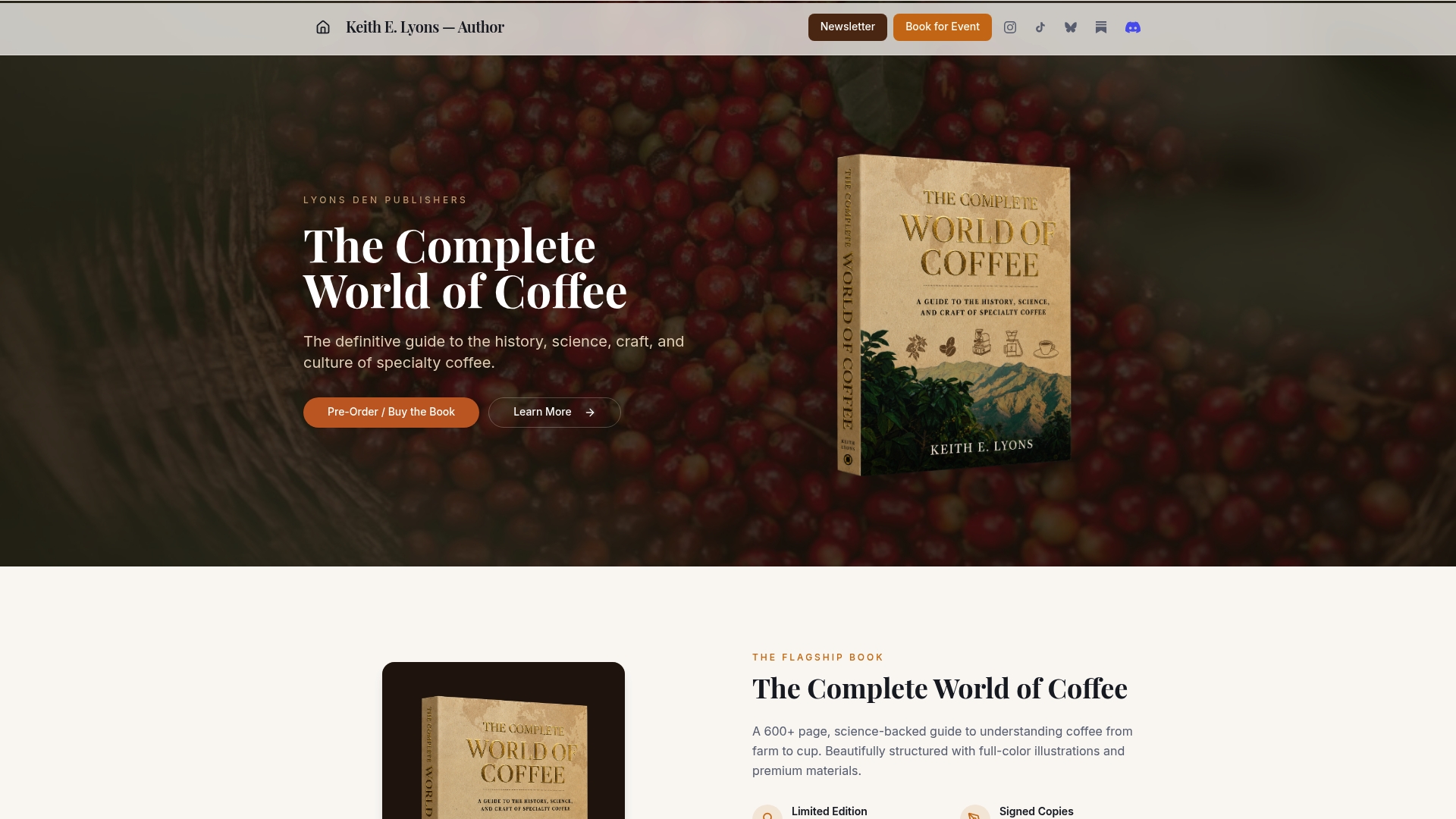
For readers working through persistent sourness related to temperature or water, the temperature and extraction resource provides a precise, practitioner-level treatment of how heat affects solubility at each stage of extraction. The water chemistry page covers mineral targets, buffering, and practical filtration options for home use. Both are part of the broader coffee science hub, which also includes paid educational sessions for baristas and enthusiasts who want structured, personalized instruction. Visit keithlyons.org/coffee-science to explore the full range of resources and find the right next step for your setup.
Further reading and sources
The following sources informed this article and provide reliable starting points for deeper study.
- Why Is My Espresso Sour or Bitter? How to Fix It — Clive Coffee's practitioner-focused guide covers the grind-first rule, the standard 18 g / 36 g / 25–30 s recipe, and the role of bean resting windows. Reliable for parameter targets and ordered troubleshooting.
- Why Does My Espresso Taste Sour and How to Fix It — Bean Ground's explanation of under-extraction causes, including temperature calibration, light roast behavior, and storage. Useful for readers troubleshooting temperature-related sourness.
- Espresso Troubleshooting Guide — Coffee Gear Hub's structured diagnostic sequence supports the one-variable-at-a-time methodology and addresses grinder inconsistency and channeling.
- Why Is My Espresso Sour? Causes and Fixes — My Home Espresso covers the sensory distinction between acidity and sourness, and provides clear guidance on puck prep and channeling diagnostics.
- 5 Ways to Fix Sour Espresso — Coffee Chronicler's treatment of water chemistry and bicarbonate buffering is one of the clearer explanations of why water mineral content affects perceived acidity.
- Extraction science — Lyons Den Publishers' comprehensive resource on extraction theory, solubility, and practical implications for home espresso.
- Temperature and extraction — Lyons Den Publishers' dedicated page on how brew temperature affects compound solubility and flavor development across roast levels.
- Water chemistry — Lyons Den Publishers' resource on mineral targets, buffering, and filtration for home espresso.
- Coffee flavor wheel guide — Practical guidance on using the SCA flavor wheel to identify and describe specific taste attributes, useful for tracking adjustments during dial-in.
- Best coffee brewing techniques for home baristas — Lyons Den Publishers' overview of foundational brewing routines applicable across espresso and filter methods.