
The strongest coffee podcasts available right now fall into four clear categories: science-forward documentaries, narrative storytelling, trade and industry, and practical brewing. Here is a curated shortlist with one recommended starter episode or episode type per show, so you can pick one and press play today.
- The Science of Coffee (Filter Stories spin-off) — Best for: extraction science and water chemistry. Start with any episode on water minerals or plant genetics. Available on Apple Podcasts.
- Filter Stories — Best for: narrative documentary storytelling about coffee's human side. Start with the first episode in any origin series. Available at filterstories.org.
- Adventures in Coffee — Best for: accessible, story-driven culture episodes with a light touch. Start with any "around the world" origin story episode. Available on Apple Podcasts.
- The Daily Coffee Pro — Best for: trade professionals tracking business and logistics. Start with any weekday episode on wholesale or supply-chain challenges. Available on Apple Podcasts.
- Coffee Think Tank (Fresh Cup) — Best for: roasting profitability and wholesale growth. Start with a roasting-margins episode. Available at freshcup.com.
- Specialty Coffee Show (Bilge Brew) — Best for: practical brewing variables without marketing spin. Start with a water or grind-size episode. Available on Apple Podcasts.
- Actually Good Coffee Podcast — Best for: small-roastery entrepreneurship and supply-chain ethics. Start with the "waves of coffee" episode. Available at actuallygoodcoffeepodcast.podbean.com.
- It's Just Coffee! — Best for: broad coffee culture debates with world barista champions and celebrities. Start with any "biggest coffee debate" episode. Available on Apple Podcasts.
- Coffee Culture with Holly Shannon — Best for: connection-focused conversations about coffee's social role. Start with any guest interview episode. Available on Spotify.
Table of Contents
- The best coffee podcasts, profiled in detail
- How to pick the coffee podcast that fits your interests
- Where to find and subscribe to coffee podcasts
- Why format and host expertise determine a podcast's real value
- Key Takeaways
- Mixing formats builds a richer understanding of coffee
- Go deeper than any podcast can take you
- Useful sources and further reading
The best coffee podcasts, profiled in detail
Each show below is described by what it actually covers, who hosts it, and which episode type to start with. The comparison table that follows lets you match a show to your specific interest at a glance.
The Science of Coffee
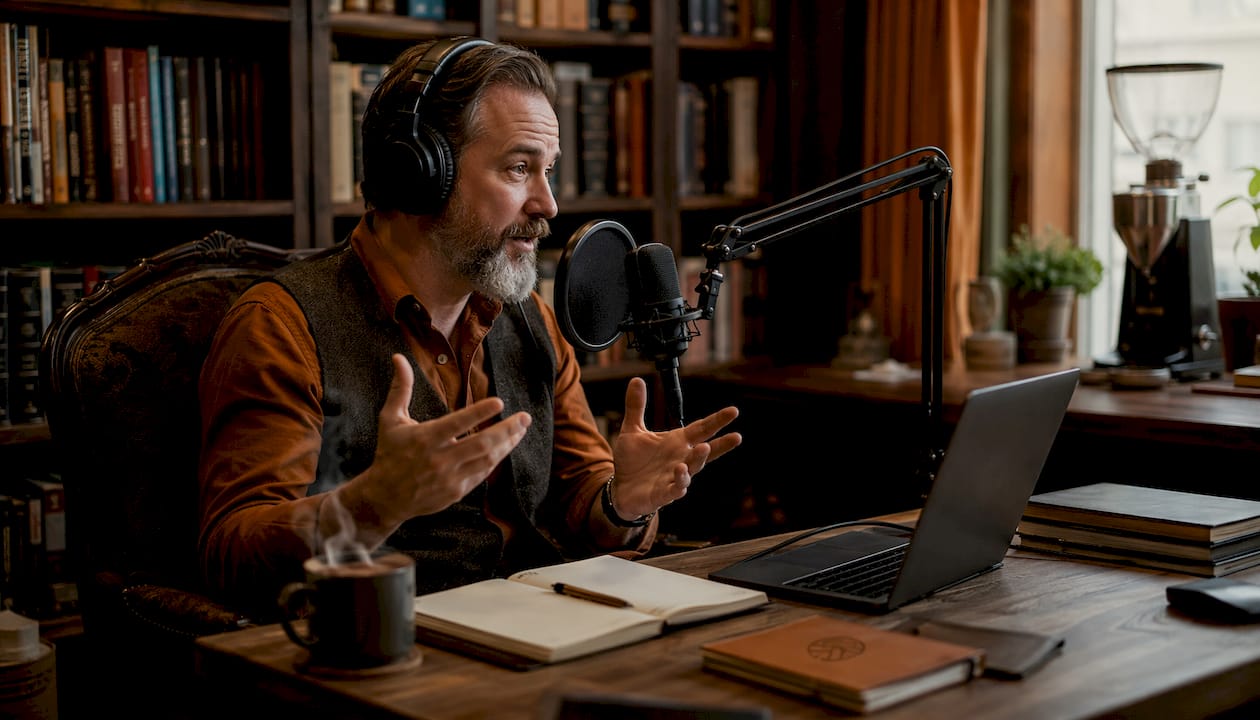
Documentary filmmaker James Harper created this show as a spin-off from his critically acclaimed Filter Stories series. Every episode investigates a specific variable: water chemistry, extraction mechanics, or plant genetics, with the kind of rigor you would expect from a science documentary rather than a brewing tutorial. Harper argues that understanding these variables moves a home brewer from recipe-following to genuine creative mastery. Start with an extraction or water-minerals episode.
| Best for | Extraction science, water chemistry, plant genetics |
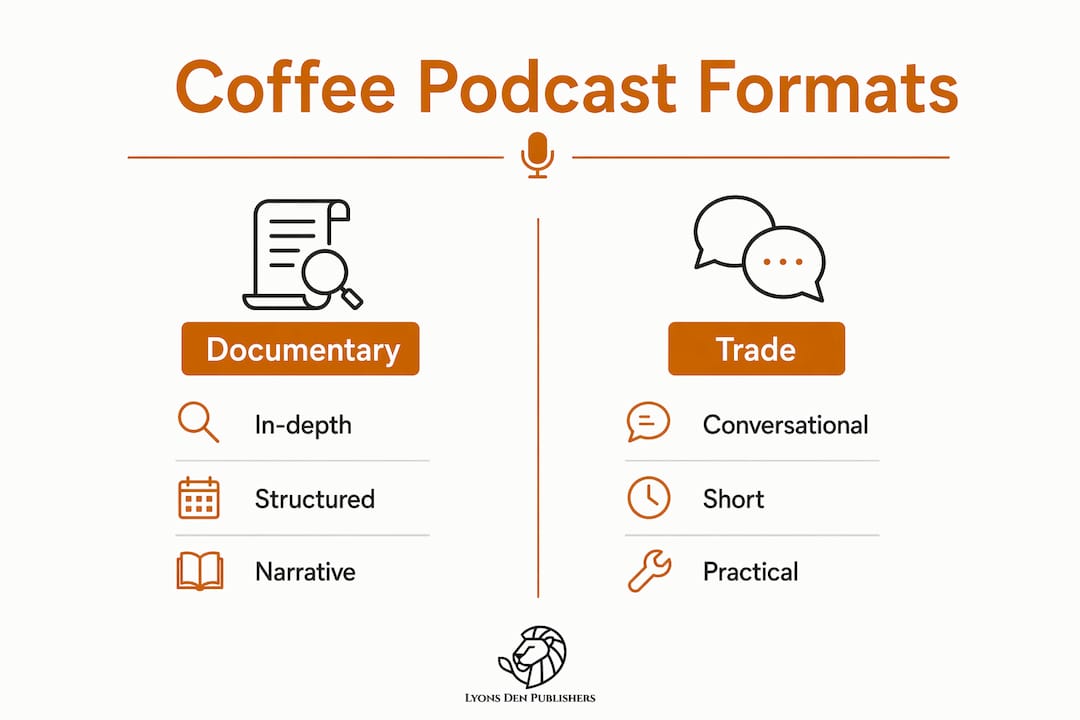
| Format | Documentary |
| Typical episode length | 20–45 minutes |
| Where to listen | Apple Podcasts, filterstories.org |
| Starter episode | Any water-minerals or extraction episode |
Filter Stories
Filter Stories is the parent series from James Harper, built around long-form audio documentaries about the people and places behind coffee. Episodes travel to origin countries and follow farmers, traders, and roasters through the supply chain. The production quality is close to BBC Radio 4 documentary standard. If you want coffee history and human narrative rather than technical instruction, this is the place to start.
Adventures in Coffee
Adventures in Coffee is a collaboration between Scott Bentley (founder of the award-winning magazine Caffeine), cycling author Jools Walker, and James Harper. The show takes a BBC/NPR-style approach: globe-trotting stories about coffee's cultural context, delivered with humor and accessibility. No episode gets too technical, which makes it the best entry point for listeners who are curious about coffee culture but not yet ready for extraction chemistry. Start with any origin-story episode from a producing country you drink regularly.

| Best for | Coffee culture, storytelling, accessible narrative |
| Format | Documentary / narrative |
| Typical episode length | 20–45 minutes |
| Where to listen | Apple Podcasts |
| Starter episode | Any origin-country story episode |
The Daily Coffee Pro
Lee Safar hosts this weekday show for trade professionals. Episodes are short, unedited, and conversational, covering business logistics, supply-chain challenges, and industry thinking without the polish of a consumer podcast. Safar recommends a "curious and constructive" approach, and that ethos shows: guests speak candidly about margins, wholesale relationships, and operational realities. If you work in the trade or want to understand how the industry actually functions, start with any episode on wholesale strategy or green-coffee sourcing.
Coffee Think Tank (Fresh Cup)
Fresh Cup's Coffee Think Tank covers roasting profitability, wholesale growth, and business-focused interviews with operators and suppliers. Episodes that feature roastery operators and consultants tend to deliver the most specific business insights, particularly on scaling and pricing strategy. This is the show to follow if you track the specialty coffee revolution from a business angle rather than a cultural one.
Specialty Coffee Show (Bilge Brew)
This show focuses on practical brewing variables: water temperature, grind size, and extraction ratios, explained without excessive marketing. Episodes are accessible enough for home brewers but specific enough to be useful to working baristas. Pair an episode on extraction science with the show's grind-size episode for a productive double session. Start with any water or temperature episode.
Actually Good Coffee Podcast
Host John Wilt documents his experience owning Maiden Coffee Roasters, covering supply-chain ethics, tariff impacts, and the realities of small-roastery entrepreneurship. The "waves of coffee" episode (Episode 55) is an unusually clear explanation of how the first through fourth waves shaped today's specialty market, and it works as a standalone listen for anyone new to the concept.
It's Just Coffee!
Hosts Ben Bicknell and Rohan Cooke interview world barista champions, athletes, and celebrities alongside everyday coffee lovers. The show tackles cultural debates head-on: which country produces the best coffee, whether Starbucks counts as "real" coffee, and similar questions the specialty community often avoids. It is the most accessible show on this list for a general audience.
Pro Tip: The New York Times recommends starting with a "starter" episode when approaching any long-running niche podcast. For coffee shows, that means picking an episode on a topic you already know something about — you will judge the host's depth more accurately than if you start cold with an unfamiliar subject.
How to pick the coffee podcast that fits your interests
The right show depends on three things: what you want to learn, how much time you have per session, and how much production polish matters to you.
- Subject focus first. Science (extraction, water, genetics) points to The Science of Coffee or Specialty Coffee Show. Culture and narrative points to Filter Stories or Adventures in Coffee. Trade and business points to The Daily Coffee Pro or Coffee Think Tank. Broad culture debates point to It's Just Coffee!
- Episode length. Documentary shows typically run 20–45 minutes. Trade shows like The Daily Coffee Pro run shorter, often under 20 minutes, which suits a commute. Long-form narrative episodes from Filter Stories can run 45–60 minutes and reward focused listening.
- Production style. Documentary and narrative shows are edited and scored. Trade shows are often unedited conversations, which can include industry jargon and sponsor segments that carry real business data. Neither is better; they serve different purposes.
- Technical rigor. Read the episode description before committing. A show that uses "science" in its title may deliver peer-level content on extraction variables or may present basic brewing tips under the same label. Guest affiliations in the show notes are a reliable signal of depth.
- Freshness. Editorial roundups are useful for discovery, but check the most recent episode date before subscribing. A highly ranked show that stopped publishing two years ago is not a live resource.
Pro Tip: Before subscribing to any show, read three episode descriptions in a row. If the language stays vague ("we talk about coffee and life"), the episodes likely will too. Specific titles ("How dissolved minerals change extraction yield") signal a host who knows the subject.
Where to find and subscribe to coffee podcasts
Every show on this list is available on at least one major platform. Here is how to access them reliably.
Major platforms:
- Apple Podcasts — the largest catalog; all shows above have Apple Podcasts pages. Search by show name, tap "Follow," and new episodes download automatically.
- Spotify — carries most shows; some producers publish video versions or bonus episodes exclusively here.
- YouTube — several shows publish video versions of episodes; useful when a host demonstrates a brewing variable visually.
- RSS and dedicated apps — Overcast, Pocket Casts, and Castro all support RSS feeds, which means you can subscribe to any show with a public feed even if it is not listed on a major platform.
Practical steps:
- Search the show name on your preferred platform.
- Tap "Follow" or "Subscribe" so new episodes appear in your feed automatically.
- Check the show's website or Apple/Spotify page for show notes, which often include links to studies, guest profiles, and brewing references mentioned in the episode.
- For transcripts, check the show's own website first; not all shows publish them, but Filter Stories and The Science of Coffee typically provide detailed episode notes.
Some producers place bonus content or early-access episodes on Patreon or their own websites, so it is worth checking the show's homepage alongside the platform page.
Why format and host expertise determine a podcast's real value
Not every coffee podcast delivers what its title promises. The format tells you a great deal about what you will actually receive.
Documentary and narrative formats are edited, scored, and structured around a central argument or story. They tend to deliver consistent depth because the production process forces the host to verify claims before publishing. Filter Stories and The Science of Coffee both follow this model.
Interview formats vary widely. The quality depends almost entirely on the host's ability to ask specific questions. A host with industry credentials will push a roaster on margin structure; a generalist host will accept a vague answer. Check whether the host has a named professional background in coffee before committing to a long-running interview series.
Unedited trade conversations, like those on The Daily Coffee Pro, deliver something different: real industry thinking, including the hesitations, corrections, and jargon that edited shows remove. They are less polished but often more candid. Trade-focused shows also tend to include sponsor segments from suppliers and equipment companies, which can carry specific business data if you know how to read them.
The label "coffee science" is inconsistent across shows. Some deliver investigative, peer-level content on extraction variables and water chemistry. Others present basic brewing tips under the same label. The only reliable check is to read the episode description and look at guest credentials before you listen.
The coffee influencer and audio media landscape has expanded significantly, which means more shows compete for the same listener. Host credentials, recurring guest quality, and the specificity of episode titles are the three fastest signals of whether a show will repay your time.
Key Takeaways
The most useful coffee podcast for any listener is the one that matches their subject interest, episode-length tolerance, and appetite for technical depth — not simply the most popular show on a ranking list.
| Point | Details |
|---|---|
| For science and extraction | The Science of Coffee and Specialty Coffee Show deliver the most technical depth; start with a water or extraction episode. |
| For culture and storytelling | Filter Stories and Adventures in Coffee offer documentary-quality narrative; start with any origin-country episode. |
| For trade and industry | The Daily Coffee Pro and Coffee Think Tank cover business realities; start with a wholesale or roasting-margins episode. |
| Evaluate before subscribing | Read three episode descriptions and check guest credentials before committing to any show. |
| Lyons Den Publishers | The coffee science and coffee history topic pages at Lyons Den Publishers extend what podcasts introduce into full reference depth. |
Mixing formats builds a richer understanding of coffee
Most listeners settle into one show and stay there. That is a reasonable habit, but it tends to create a lopsided picture of coffee. A listener who only follows science podcasts understands extraction variables but may know little about the supply-chain ethics that determine which coffees reach them. A listener who only follows trade shows understands margins but may have no framework for why water chemistry affects the cup they are selling.
The more productive approach is to rotate deliberately: one science episode, one narrative or culture episode, one trade episode per week. The three formats reinforce each other in ways that a single-show habit cannot replicate. An episode on water chemistry lands differently after you have heard a documentary about the farmers managing irrigation at origin. A trade conversation about pricing makes more sense once you understand the processing variables that create quality differentials.
Coffee knowledge is not linear. The podcasts on this list each illuminate a different facet of the same subject, and the connections between those facets are where genuine understanding forms.
Go deeper than any podcast can take you
Podcasts are an excellent way to encounter a new idea or hear a practitioner think out loud. They are not, by design, reference material. An episode on extraction cannot show you a chart, walk you through a controlled variable, or let you return to a specific paragraph when your brew goes wrong.
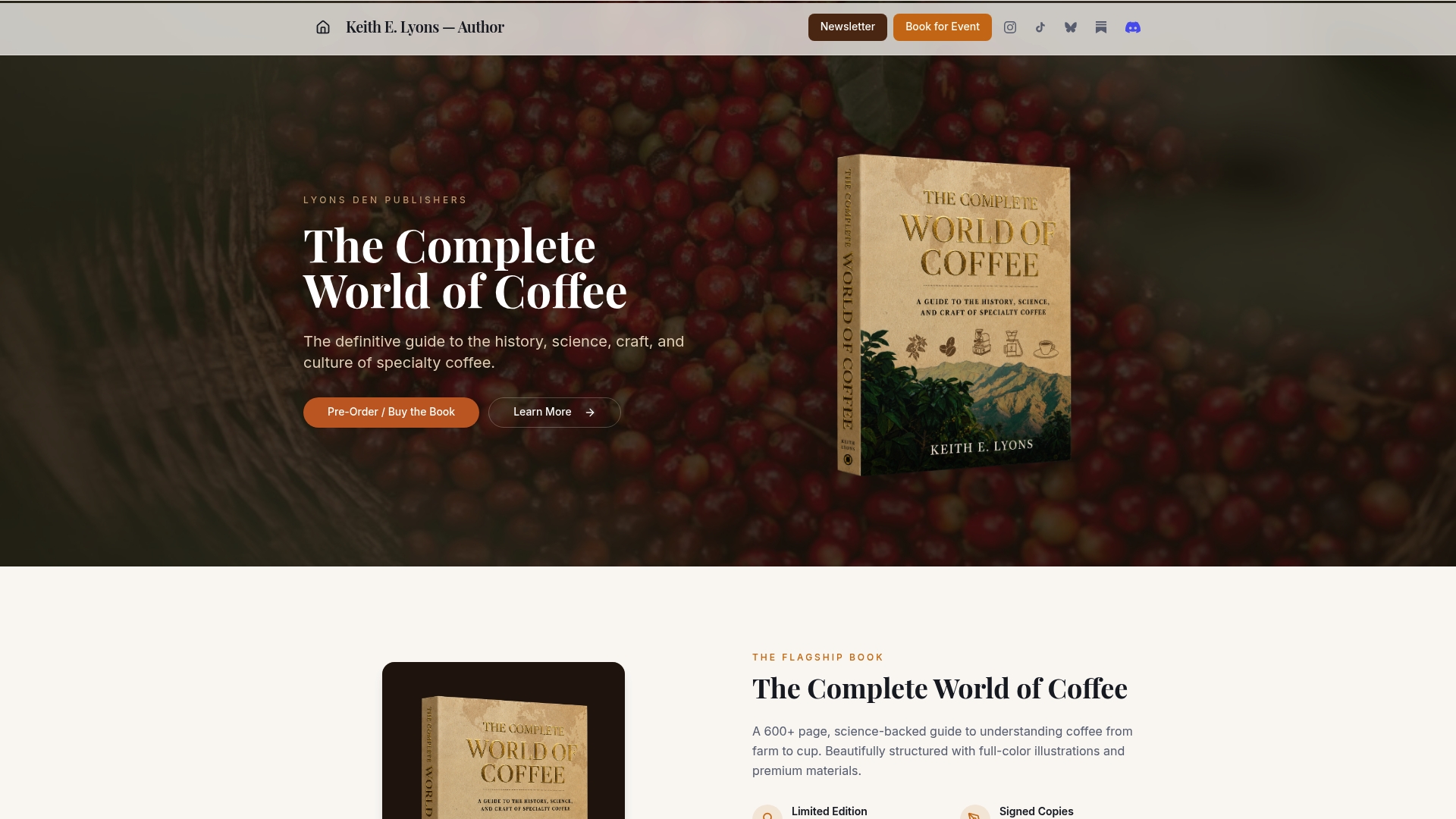
Lyons Den Publishers offers exactly that depth. The Complete World of Coffee by Keith Lyons covers extraction science, water chemistry, sensory evaluation, processing methods, and coffee history in a single comprehensive reference. For listeners who want to move from passive listening to active understanding, the coffee science topic pages and coffee history hub at Lyons Den Publishers expand on the subjects these podcasts introduce. Each topic page is written to the same standard as the book: evidence-based, specific, and built for readers who want to understand the "why" behind every variable. Browse the topic pages, or pick up The Complete World of Coffee to have the full reference at hand.
Useful sources and further reading
Official show pages:
- The Science of Coffee — Apple Podcasts
- Filter Stories — filterstories.org
- Adventures in Coffee — Apple Podcasts
- The Daily Coffee Pro — Apple Podcasts
- Coffee Think Tank — Fresh Cup
- Specialty Coffee Show — Apple Podcasts
- Actually Good Coffee Podcast
- It's Just Coffee! — Apple Podcasts
- Coffee Culture with Holly Shannon — Spotify
- FeedSpot: 100 Best Coffee Podcasts
Lyons Den Publishers topic pages:
- Coffee Science Topics
- Coffee History Topics
- Extraction Science
- Temperature and Extraction
- What Does a Coffee Scientist Do?
- Coffee Extraction Chart: A Home Brewer's Complete Guide
Partner resources:
- What Is Coffee Extraction and How It Shapes Flavor — Font Coffee Roasters
- Why Independent Roasters Beat Corporations — Font Coffee Roasters