What is a cupping spoon and why does it matter?
A cupping spoon is a specialized tasting tool designed for coffee cupping, the standardized professional method of evaluating coffee's aroma, flavor, body, acidity, and aftertaste. Unlike ordinary flatware, it delivers a consistent volume of liquid and enables the forceful slurp that spreads coffee across every taste receptor simultaneously.
- Designed for maximum liquid capacity in a single draw
- Enables the slurping technique central to SCA cupping protocols
- Removes variables like cup size and extraction method from the tasting equation
- Used by roasters, green buyers, Q Graders, and baristas worldwide to assess coffee objectively
Table of Contents
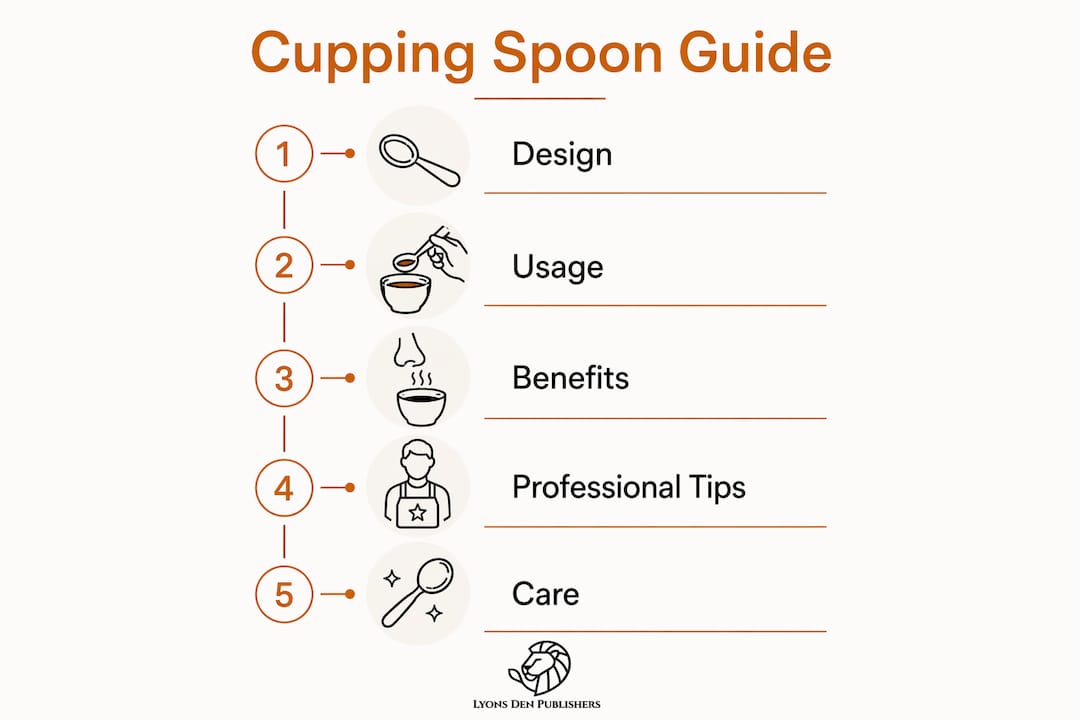
- How the design of a cupping spoon sets it apart
- How to use a cupping spoon during a tasting session
- How cupping spoons differ from espresso spoons and teaspoons
- Why professionals are particular about which spoon they choose
- Where the cupping spoon comes from
- How to care for your cupping spoon
- Key Takeaways
How the design of a cupping spoon sets it apart
The deep round bowl and arched handle distinguish a cupping spoon from every other piece of flatware in a coffee professional's kit. That bowl shape is not aesthetic; it holds enough liquid for a full slurp without spillage and positions the coffee at the right angle for the mouth.
- Bowl shape: Round and deep, similar to a bouillon spoon, optimized for liquid transfer and aeration
- Handle: Arched and balanced to reduce wrist fatigue during sessions involving dozens of samples
- Materials: Stainless steel is the professional standard; porcelain is used occasionally. Both are flavor-neutral and do not interact with coffee's acids or oils
- Size: Bowls typically hold enough coffee for a single slurp, standardizing volume across tasters
- SCA alignment: The design directly supports consistent volume delivery required by Specialty Coffee Association cupping standards
How to use a cupping spoon during a tasting session
Three distinct actions define cupping spoon use: breaking the crust, skimming, and slurping. Each step has a specific purpose, and doing them correctly determines how much information a taster actually extracts from the cup.
- Breaking the crust: After four minutes of steeping, push the floating grounds to the back of the bowl with the spoon. This releases a concentrated burst of aroma — the most volatile fragrance compounds escape at this moment
- Skimming: Remove remaining foam and floating particles using two spoons working together. A single spoon cannot clear the surface efficiently
- Slurping: Dip the spoon just below the surface, then slurp forcefully. The spray coats the entire palate and engages taste receptors that gentle sipping misses entirely
- Rinsing: Submerge the spoon in a dedicated hot-water rinse cup between every sample. This is non-negotiable; residual flavor from one coffee will distort the next
- Consistency: Moving through samples in the same order, with the same technique, is what makes comparison objective rather than impressionistic
Pro Tip: Use a two-spoon system — one dedicated to breaking and skimming, a second kept clean for tasting. This separation prevents cross-flavor contamination and builds the muscle memory that speeds up professional cupping sessions.
How cupping spoons differ from espresso spoons and teaspoons
The differences are functional, not cosmetic. Teaspoons typically hold 2.5–3.5 ml; espresso spoons are smaller still and designed for stirring, not tasting. A cupping spoon's bowl holds up to 5 ml and is shaped specifically for slurping rather than scooping or stirring.
- Bowl volume: Cupping spoons hold significantly more liquid, enabling a full tasting draw in one motion
- Bowl depth: Deeper than a teaspoon, which prevents spillage during the aggressive slurp
- Handle ergonomics: Cupping spoon handles are longer and arched for repeated use; espresso spoon handles are short and suited only for brief stirring
- Intended function: Espresso and teaspoons are serving tools; cupping spoons are evaluation instruments
- Professional suitability: Only cupping spoons meet the volume and ergonomic requirements of formal SCA-protocol sessions. A soup spoon can substitute at home, but it introduces inconsistency
Why professionals are particular about which spoon they choose
The personal attachment many professional cuppers develop toward a specific spoon is not mere habit. Ergonomics directly influence fatigue and precision across long sessions. A spoon that feels unbalanced in the hand, or whose bowl sits at the wrong angle, introduces subtle inconsistencies that accumulate over dozens of samples.
- Balance: A well-balanced spoon reduces micro-adjustments during slurping, keeping technique consistent
- Bowl depth preference: Some professionals prefer a shallower bowl for easier slurping; others favor depth to minimize spillage
- Personal calibration: The best cupping spoon is often the one a taster has used long enough to develop reliable muscle memory with
- Selection advice: Try several bowl shapes and handle lengths before committing. What works for a Q Grader cupping 30 samples daily may not suit a home enthusiast cupping three
For a broader look at how coffee flavor profiling connects to cupping technique, the relationship between tool choice and sensory outcome becomes even clearer.
Where the cupping spoon comes from
The cupping spoon's origins are tied directly to the formalization of coffee trade and quality assessment in the late 19th and early 20th centuries. As coffee trading houses in New York, Hamburg, and Le Havre needed reliable methods to evaluate shipments from multiple origins, tasting protocols emerged that demanded consistent, repeatable tools. The deep-bowled spoon, borrowed in form from European soup service, became the standard instrument because it transferred liquid cleanly and allowed tasters to assess aroma during the draw.

The Specialty Coffee Association later codified these practices into the formal cupping protocol still used today, cementing the spoon's role as the primary tasting instrument. The cupping process that emerged from this history is now practiced identically from Ethiopia to El Salvador, with the spoon as its constant.
How to care for your cupping spoon
Proper maintenance preserves both the spoon's physical integrity and its flavor neutrality — the two qualities that make it useful.
- Rinse immediately after use to prevent coffee oils from oxidizing on the bowl surface
- Wash with mild, unscented dish soap. Scented detergents leave residue that can subtly affect tasting sessions
- Avoid abrasive scrubbers on polished stainless steel; fine scratches harbor oils and bacteria over time
- Dry thoroughly before storage to prevent water spots and, in lower-quality alloys, surface corrosion
- Store separately from other flatware to protect the bowl's finish and prevent scratching
- Inspect regularly: A dented or warped bowl changes the volume delivered per draw, undermining the consistency the spoon is meant to provide
Key Takeaways
A cupping spoon is the single most important instrument in coffee sensory evaluation, enabling the standardized slurping technique that reveals a coffee's full flavor profile objectively.
| Point | Details |
|---|---|
| Specialized design | The deep round bowl and arched handle optimize liquid volume and slurping technique. |
| Three core functions | Breaking the crust, skimming foam, and slurping are the spoon's primary roles in cupping. |
| Not interchangeable | Teaspoons hold less liquid—typically 2.5–3.5 ml—while cupping spoons hold about 5 ml, a difference that affects tasting accuracy. |
| Two-spoon system | Professionals use one spoon for breaking and skimming, a second clean spoon for tasting. |
| Care matters | Flavor-neutral materials and proper cleaning preserve the spoon's performance over time. |
The cupping spoon is a small tool with a precise purpose: to deliver coffee consistently, aerate it fully, and keep every variable except the coffee itself out of the evaluation. For readers who want to go deeper into sensory evaluation, brewing science, and the full history of coffee assessment, The Complete World of Coffee from Lyons Den Publishers covers all of it in one authoritative reference.