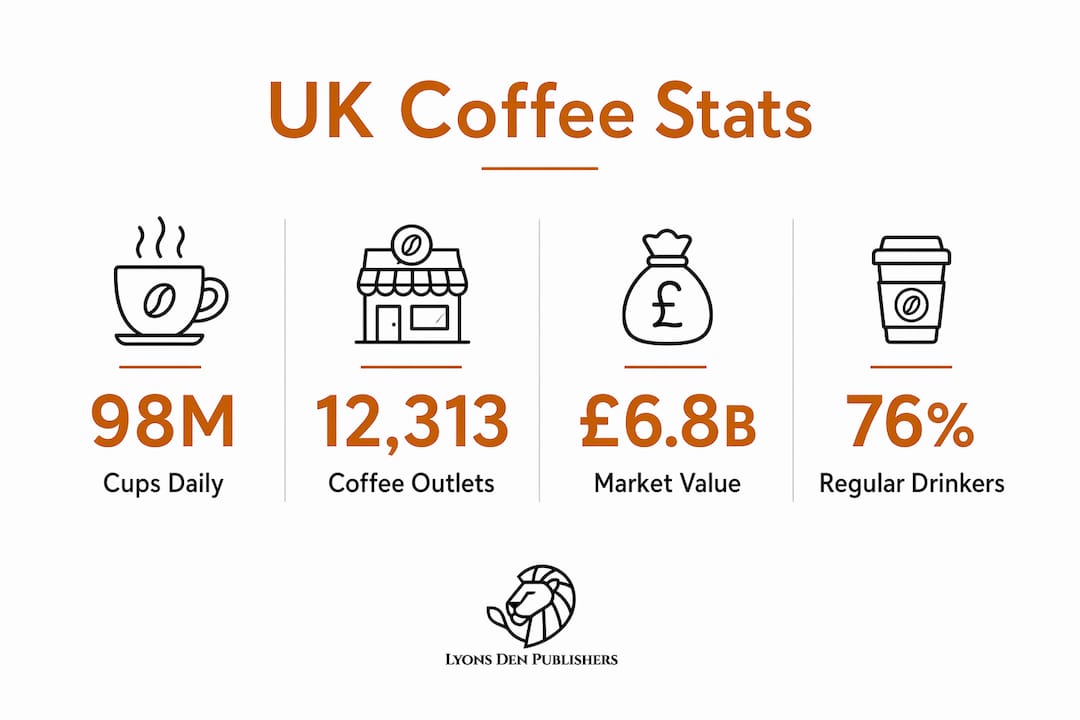
UK coffee culture is defined by daily ritual, specialty-grade expectations, and a growing demand for ethical sourcing that reaches all the way back to the farm. British residents consume approximately 98 million cups of coffee daily, with 76% drinking it regularly as of 2025. That scale places coffee at the center of British social life, not just morning routines. The market has matured well beyond instant granules and chain-brand lattes. Today, UK coffee enthusiasts expect roast date transparency, single-origin traceability, and brewing control that pods simply cannot deliver.
How has the UK coffee market evolved today?
The UK branded coffee shop market reached 12,313 outlets valued at £6.8 billion in early 2026. That figure reflects a market that has expanded far beyond its traditional high-street roots. The sheer number of outlets signals that coffee is no longer a discretionary spend for most British consumers. It is a daily non-negotiable.
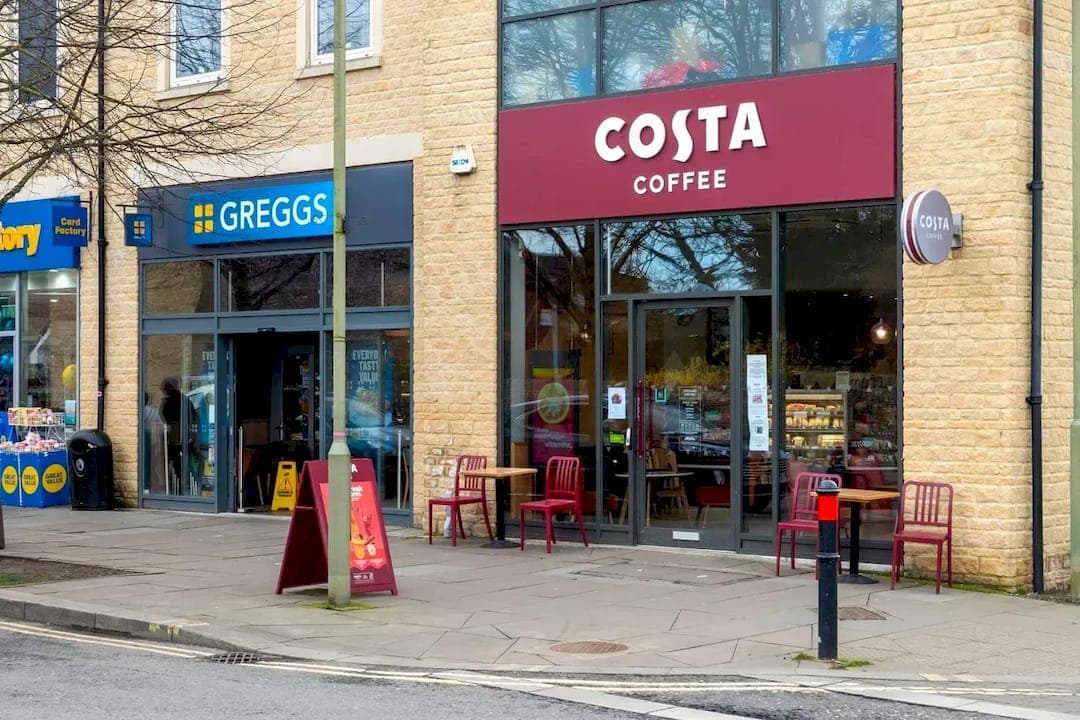
One of the most telling structural shifts is Greggs overtaking Costa as the largest coffee chain by outlet count. Greggs now operates 2,737 sites compared to Costa’s 2,707. That reversal matters because Greggs built its coffee volume on affordability and convenience, not premium positioning. It signals that a large segment of the market prioritizes accessibility over artisanal credentials.
At the same time, the UK coffee market shows clear polarization between value-led chains and premium specialty operators. Middle-ground brands that offer neither genuine affordability nor genuine quality are losing relevance. Independent specialty cafés are filling the premium space with authenticity, rotating seasonal menus, and direct relationships with coffee producers.
The at-home segment is growing just as fast. The UK at-home coffee market stood at £899 million in 2025 and is forecast to reach £1.15 billion by 2030. That growth is driven by 12.6 million UK households that own pod machines, alongside a rising group of enthusiasts who have moved beyond pods entirely toward specialty beans and manual brewing.
Key market dynamics at a glance
-
Value vs. premium split: Affordable chains and specialty independents are both growing. Mid-tier operators without a clear identity are contracting.
-
Independent specialty growth: Consumers increasingly favor cafés with a defined origin story, skilled baristas, and rotating single-origin offerings.
-
At-home investment: Pod machine ownership is widespread, but specialty bean purchases from direct-to-consumer roasters are rising faster.
-
Coffee delivery UK: Subscription services from independent roasters now ship freshly roasted beans to homes within 24 hours of roasting.
What defines UK coffee drinking habits and culture?
British coffee consumption is a structured daily habit, not a casual indulgence. A quarter of all coffee consumed in the UK happens during work or study sessions. That statistic reveals how deeply coffee is woven into productivity culture, not just leisure.
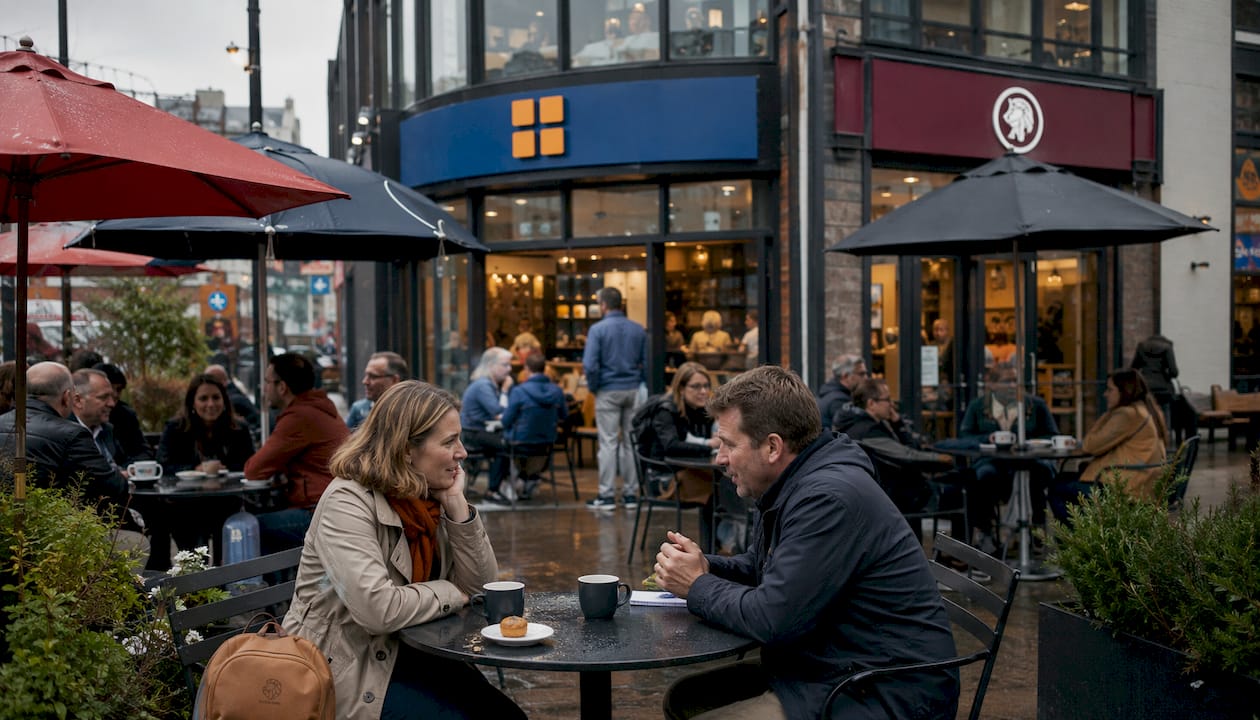
The drinks that dominate UK café menus reflect a strong Italian influence. Flat whites, cappuccinos, and lattes account for the majority of espresso-based orders. The flat white in particular became a cultural marker of the specialty coffee movement, arriving from Australia and New Zealand in the early 2000s and quickly becoming a standard expectation rather than a specialty item. UK café culture has shifted from purely functional stops to hybrid social and working spaces. Consumers now expect quality espresso-based drinks as a baseline, not a treat.
Social coffee breaks serve a function beyond caffeine. They create informal spaces for collaboration, relationship-building, and mental reset. This is especially true in hybrid work environments, where a café visit fills the social gap left by reduced office time. The role of social trends in restaurants and cafés shows that consumers increasingly choose venues based on atmosphere and community feel, not just menu quality.
Ethical sourcing has become a cultural driver rather than a marketing add-on. Fairtrade certification increasingly influences purchasing decisions, aligning daily coffee habits with broader values around labor rights and environmental responsibility. Consumers who buy specialty coffee at home apply the same ethical lens they use in cafés.
Pro Tip: When choosing a café or roaster, look for specific origin information on the menu or packaging. “Ethiopian” is a region. “Yirgacheffe, washed process, Kochere cooperative” is traceability. The more specific the detail, the more accountable the supply chain.
How do UK enthusiasts approach brewing and bean sourcing?
Freshness is the single most important quality variable for serious home brewers. The industry standard among specialty UK coffee roasters is same-day or next working day roasting and dispatch, with roast date labeling preferred over best-before dates. A roast date tells you exactly how fresh the coffee is. A best-before date tells you almost nothing useful about peak flavor.
The shift from supermarket coffee to direct-from-roaster purchasing is accelerating. Specialty coffee consumption has moved firmly into the home, with enthusiasts demanding origin transparency and production process detail that supermarket brands cannot provide. Buying directly from a roaster gives access to roast profiles, processing methods, and farm-level sourcing data that changes how you taste and evaluate a cup.
Manual brewing methods are rising sharply among enthusiasts. Pour-over and Aeropress techniques give brewers direct control over water temperature, grind size, and extraction time. Pods offer convenience but remove all of those variables from the brewer’s hands. For enthusiasts who want to taste the difference between a washed Ethiopian and a natural Brazilian, manual methods are the only way to do it accurately. The best coffee brewing techniques for home baristas cover these methods in depth, including grind-to-water ratios and temperature targets for each style.
Consumers are also raising the bar on quality assurance. Farm-level traceability and mycotoxin-free testing are becoming baseline expectations among specialty buyers, not premium features. This reflects a broader shift toward treating coffee with the same scrutiny applied to food provenance. Single-origin beans from a named farm or cooperative now carry more credibility than blends with vague regional descriptions.
What to look for when sourcing specialty beans
-
Roast date: Printed on the bag, not a best-before date. Aim to brew within two to four weeks of the roast date.
-
Processing method: Washed, natural, or honey process each produces distinct flavor profiles. Knowing the method helps you predict the cup.
-
Origin specificity: Country, region, farm or cooperative, and altitude all affect flavor. More detail means more accountability.
-
Certification: Fairtrade, Rainforest Alliance, or direct trade relationships signal ethical sourcing standards.
-
Roaster calibration: Specialty roasters calibrate machines daily based on specific roast profiles, producing consistency that mass-market roasting cannot match.
Pro Tip: Store whole beans in an airtight, opaque container at room temperature. Avoid the refrigerator. Moisture and temperature fluctuation accelerate staling faster than air exposure alone.
What future trends are shaping UK coffee culture?
The UK coffee market in 2026 is fragmenting in ways that favor both the budget-conscious and the deeply curious. Hybrid work patterns have redistributed coffee consumption across home kitchens, neighborhood cafés, and office spaces simultaneously. No single channel dominates the way the high-street chain once did.
Beverage variety is expanding beyond espresso. Cold brew, matcha, and adaptogen-infused drinks are appearing on specialty café menus alongside traditional espresso-based options. These additions reflect a consumer base that is interested in the ritual and experience of a quality beverage, not just caffeine delivery. Specialty independents are well-positioned to lead this category because they already operate with the flexibility and sourcing knowledge required.
Traceability and testing standards are moving from niche to expected. Consumers who have learned to read a roast date and ask about processing methods are now asking about mycotoxin testing and carbon footprint data. This is not a fringe concern. It reflects a maturing market where quality and ethics are evaluated together.
The growth potential for independent specialty cafés in UK neighborhoods is significant. Consumers increasingly favor venues that offer a defined identity, skilled preparation, and a genuine connection to the coffee’s origin. Generic café experiences without a clear point of view are losing ground to operators who can tell a complete story from farm to cup.
-
Cold brew and alternative beverages are growing on specialty menus as consumers seek variety beyond espresso.
-
Neighborhood independents are outperforming mid-tier chains by offering authenticity and community connection.
-
Direct-to-consumer roaster subscriptions are replacing supermarket coffee for enthusiasts who prioritize freshness.
-
Sustainability metrics including carbon labeling and regenerative farming partnerships are becoming competitive differentiators.
Key Takeaways
UK coffee culture in 2026 is defined by a clear split between value-driven convenience and specialty-grade quality, with enthusiasts driving demand for freshness, traceability, and manual brewing control.
| Point | Details |
|---|---|
| Daily consumption scale | UK residents drink approximately 98 million cups daily, with 76% consuming coffee regularly. |
| Market polarization | The UK coffee shop market favors affordable chains and premium independents; mid-tier operators are losing ground. |
| Freshness standard | Same-day or next-day roasting with roast date labeling is the baseline for specialty coffee quality. |
| Manual brewing advantage | Pour-over and Aeropress methods give enthusiasts control over temperature, grind, and extraction that pods cannot match. |
| Ethical sourcing expectation | Farm-level traceability and Fairtrade certification are now baseline consumer expectations, not premium features. |
The UK coffee scene rewards the curious
I have spent years studying coffee markets across the world, and the UK stands out for one specific reason: its consumers are unusually willing to change their habits when they encounter something genuinely better. The shift from instant coffee to espresso, from chain lattes to flat whites, and now from pods to pour-over, each of those transitions happened faster in the UK than most markets would predict.
What strikes me most in 2026 is how seriously British enthusiasts take sourcing. The questions I hear most often are not about equipment. They are about where the coffee came from, how it was processed, and whether the farmer was paid fairly. That is a sophisticated consumer base, and it deserves equally sophisticated resources.
My honest advice is to support independent roasters who publish their roast dates and sourcing data openly. The transparency gap between a specialty roaster and a supermarket brand is enormous, and once you taste the difference, the supermarket shelf becomes very difficult to return to. The UK has some of the most skilled and ethically committed roasters in the world. The best coffee shops UK has to offer are built on exactly those relationships.
Consumer education remains the single biggest lever for elevating the entire market. When enthusiasts understand why freshness matters, why processing method affects flavor, and why traceability is not just marketing language, they make better purchasing decisions. Those decisions reward the producers and roasters who do the work properly.
— Keith E Lyons
Specialty coffee resources from Lyons Den Publishers
Lyons Den Publishers exists to give coffee enthusiasts the depth of knowledge that transforms a daily habit into a genuine craft. Keith Lyons’ The Complete World of Coffee covers everything from cultivation and processing to roasting science, brewing technique, and sensory evaluation.
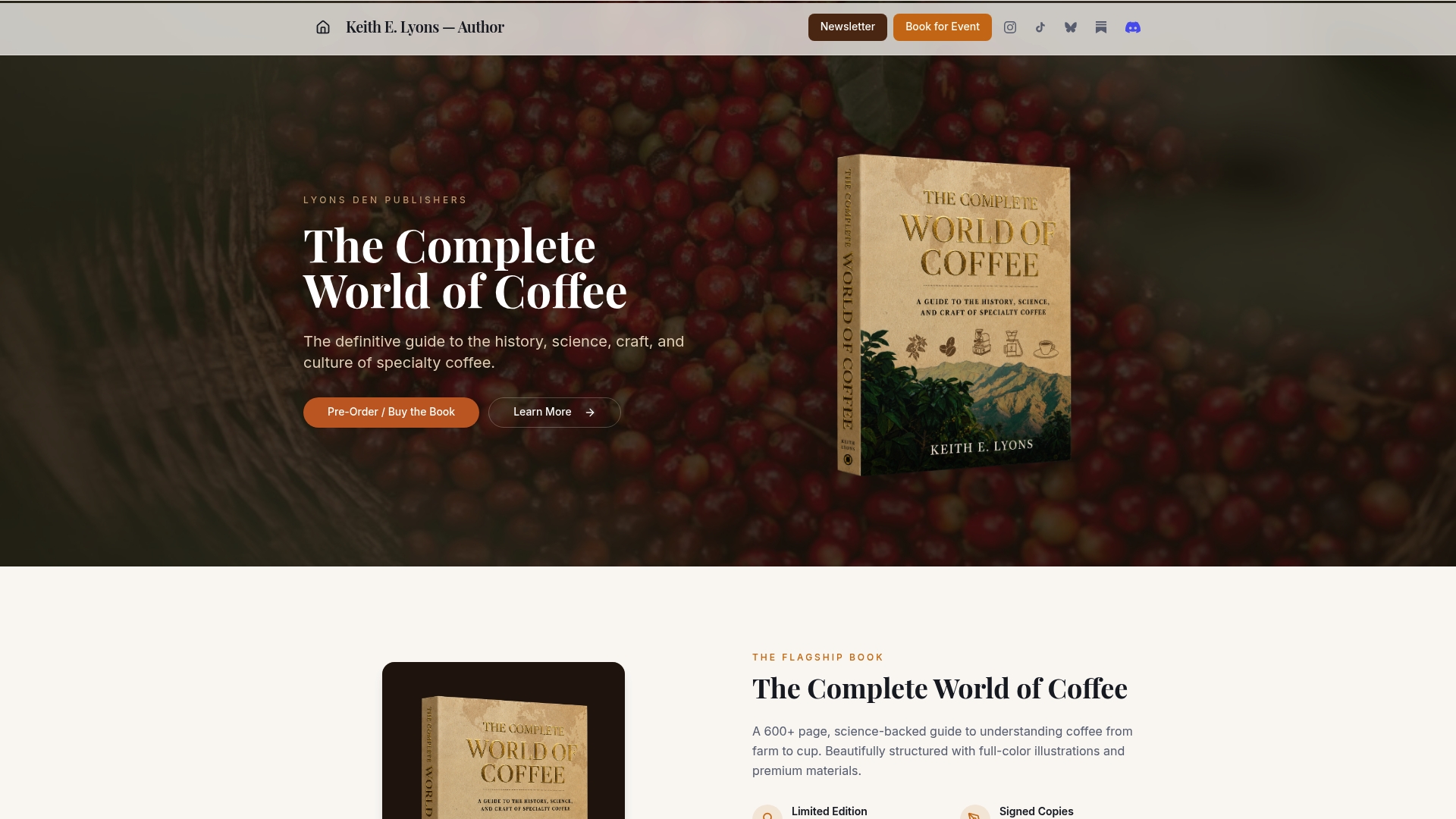
For enthusiasts ready to put that knowledge into practice, Lyons Den Publishers offers curated specialty coffee bundles selected for freshness, origin transparency, and quality. Each bundle is designed to pair with the brewing and sourcing principles covered across the site. Whether you are refining your pour-over technique or exploring single-origin beans for the first time, these resources give you a grounded, evidence-based starting point.
FAQ
How many cups of coffee do UK residents drink daily?
UK residents consume approximately 98 million cups of coffee daily, with 76% drinking coffee regularly as of 2025. That makes coffee one of the most consumed beverages in the country.
What is the UK coffee shop market worth in 2026?
The UK branded coffee shop market reached £6.8 billion across 12,313 outlets in early 2026. Greggs surpassed Costa as the largest chain by outlet count, with 2,737 sites to Costa’s 2,707.
What brewing methods do UK coffee enthusiasts prefer at home?
Manual methods like pour-over and Aeropress are rising among enthusiasts because they allow direct control over water temperature, grind size, and extraction time. Pod machines are widely owned but offer less control over flavor variables.
Where can UK enthusiasts buy specialty coffee beans?
Direct-from-roaster purchases, either through subscription services or online orders, are the preferred route for enthusiasts who prioritize freshness and origin transparency. Many specialty UK roasters ship within 24 hours of roasting with roast date labeling on every bag.
What does ethical sourcing mean in the context of UK coffee?
Ethical sourcing in UK coffee refers to farm-level traceability, Fairtrade or direct trade certification, and in some cases mycotoxin-free testing. These standards confirm that producers were paid fairly and that quality was maintained throughout the supply chain.