Is MSG present in commercial coffee, and is it safe?
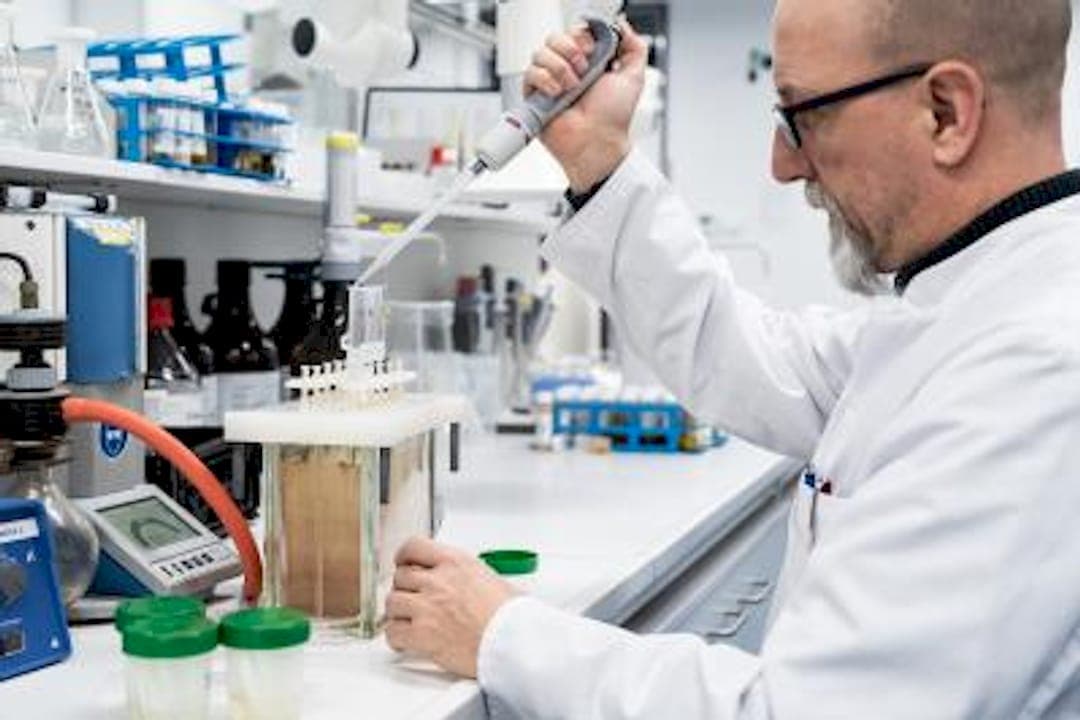
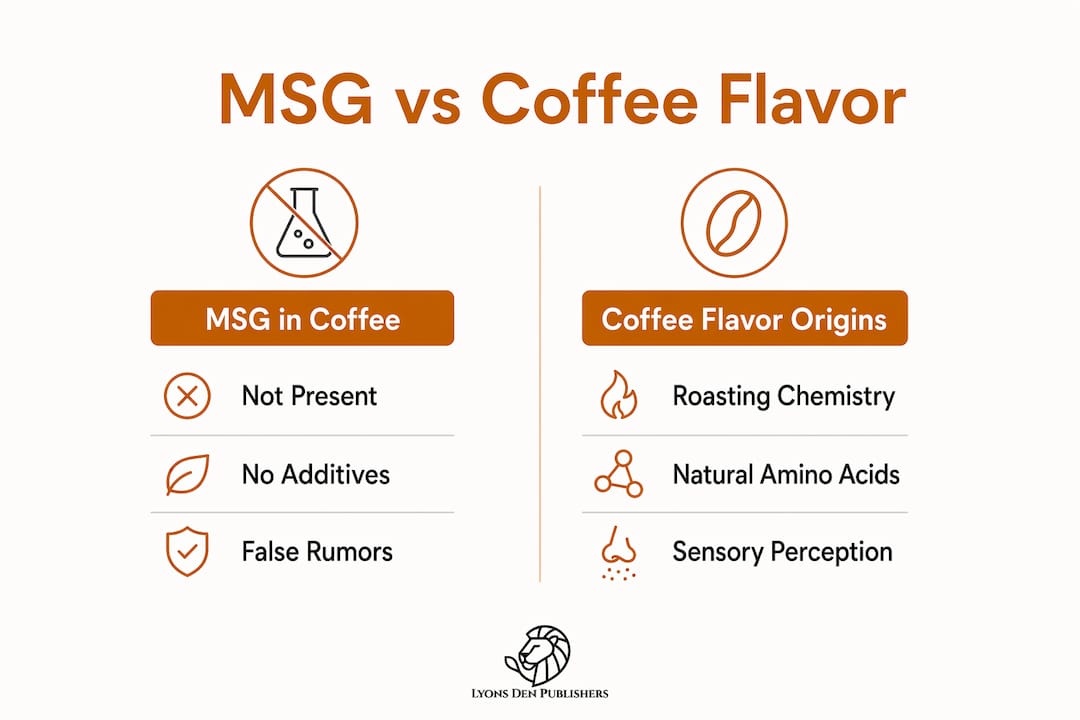
MSG is not an ingredient in commercial coffee. Lab testing has consistently disproved rumors that coffee producers add monosodium glutamate to their beans or packaging. No credible evidence supports those claims.
On the safety question, the answer is equally clear. The FDA classifies MSG as generally recognized as safe for consumption at normal dietary levels, a position shared by food safety bodies in Canada, Australia, and the European Union.
A few key facts worth knowing:
-
MSG is the sodium salt of glutamic acid, an amino acid that occurs naturally in tomatoes, mushrooms, Parmesan cheese, and many other foods.
-
Under 1% of people may experience mild, temporary symptoms after consuming large isolated doses of 3g or more on an empty stomach, well above anything present in a normal meal.
-
MSG is not an allergen. Reactions, when they occur, tend to be mild and temporary in certain situations.
-
The FDA requires food manufacturers to list MSG on ingredient labels when it is added.
Where do umami-like flavors in coffee actually come from?
Coffee contains negligible free glutamates. Any savory or umami-like quality you perceive in a cup is not the result of added MSG or even measurable glutamate levels. Research confirms that umami flavors in coffee are gustatory illusions driven largely by retronasal olfaction, the process of smelling aromas as they travel up from the back of the throat during swallowing.
Scientists at UC Davis found that if you hold your nose while drinking coffee, you taste only bitterness and acidity. The broader flavor profile, including any savory notes, emerges only when smell is also engaged. Sweetness, umami, and complexity are aroma-dependent perceptions, not signals from taste receptors responding to glutamate molecules.
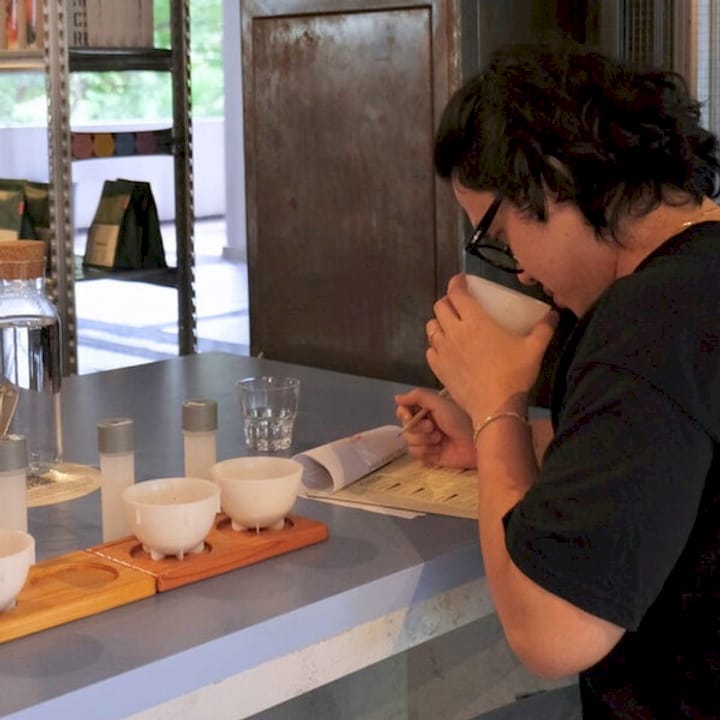
Roaster Takahito Koyanagi, the 2016 New Zealand Cup Tasters Champion, puts it precisely:
Kokumi describes a sensation of depth, richness, and mouthfeel rather than a distinct taste. When a well-roasted coffee feels round and balanced, that quality aligns more closely with kokumi than with the glutamate-driven umami found in a bowl of miso soup. Savory or meaty notes that do appear in coffee are often a sign of a roasting defect called “baking,” where beans are held at a stable temperature too long, burning off acidity and producing flat, meaty flavors.
Pro Tip: If you want to explore natural flavor enhancement, brewing technique adjustments such as water temperature and grind size have a far greater impact on perceived sweetness and body than any additive.
Common myths about MSG in coffee
The idea that coffee companies secretly add MSG to create addiction or boost sales has circulated online for years. It has no factual basis. When specific companies were targeted by these claims, lab tests disproved them. No coffee producer has been found adding MSG to beans or packaging.
Several myths persist regardless:
-
“No MSG” labels on coffee are meaningful. They are not. Retailers apply this label for the same marketing reason they put “gluten free” on products that never contained gluten. Coffee does not contain MSG, so the label conveys no new information.
-
MSG makes coffee addictive. There is no mechanism or evidence for this. Caffeine is the compound in coffee with well-documented stimulant properties.
-
Negative reactions to coffee prove MSG is present. Coffee itself, along with orange juice and tomato juice, can trigger esophageal irritation in sensitive individuals, independent of any additive.
-
MSG is as unusual an additive as artificial flavoring. Salt is widely accepted as a coffee additive for bitterness reduction, and MSG functions similarly as a flavor modifier. The resistance to MSG in coffee is cultural, not scientific.
Health perspectives on MSG relevant to coffee drinkers
The scientific consensus on MSG safety is that it poses no meaningful health risk at normal dietary intake levels. Studies that reported toxic effects used doses administered by injection or in quantities far exceeding anything a person would consume through food or drink. Clinical reviews find those results have little relevance to human dietary exposure.
A common source of confusion is the association between MSG and unhealthy processed foods. MSG appears in many ultra-processed products that are also high in sodium, refined fats, and artificial ingredients. The health concerns linked to those foods belong to their overall composition, not to MSG specifically.
For coffee drinkers interested in flavor modulation, the practical guidance from specialty coffee professionals points to salt rather than MSG. A small pinch of salt, roughly ⅛ teaspoon per cup, reduces perceived bitterness and creates a smoother finish. MSG may produce a similar effect through its umami-enhancing properties, but it is far less common in coffee preparation because umami is not a primary flavor in the cup.
-
Adverse reactions to MSG require large doses, typically more than 3g, consumed without food.
-
Eating MSG as part of a normal meal significantly reduces the likelihood of any reaction.
-
Coffee drinkers with sensitivity to esophageal irritants should note that coffee itself can cause similar symptoms, regardless of additives.
What this means for your cup
MSG is not in your coffee. The savory or complex notes you sometimes perceive come from roasting chemistry and retronasal smell, not from glutamates. The myths around MSG in coffee are driven by marketing and misinformation, not evidence.
Pro Tip: Curious about how roast profiles shape flavor? Exploring specialty coffee bundles from different origins is one of the most direct ways to experience how processing and roasting create complexity without any additives.
For readers who want to go deeper on coffee flavor science, sensory evaluation, and the chemistry of roasting, The Complete World of Coffee by Keith Lyons covers all of it in authoritative detail.
Key Takeaways
MSG is not added to commercial coffee, and its perceived flavor effects in the cup trace back to roasting and sensory perception, not glutamate content.
| Point | Details |
|---|---|
| MSG is absent from coffee | Lab testing has consistently found no MSG in commercial coffee beans or packaging. |
| FDA classifies MSG as safe | MSG is generally recognized as safe at normal dietary levels by the FDA and global food bodies. |
| Umami notes come from roasting | Savory flavors in coffee arise from retronasal olfaction and roast chemistry, not free glutamates. |
| “No MSG” labels are marketing | Coffee never contains MSG, so such labels provide no factual information to the consumer. |
| Salt is the practical alternative | A pinch of salt (⅛ teaspoon per cup) reduces bitterness more reliably than MSG in coffee preparation. |