
Reverse osmosis water is good for coffee only when it has been remineralized. On its own, RO water strips out the calcium and magnesium that drive flavor extraction, leaving coffee flat, thin, or harshly acidic. Remineralized RO water, however, can meet the Specialty Coffee Association's brewing water standard for total dissolved solids, providing an ideal mineral content for coffee brewing, giving home brewers a clean, controlled foundation that tap water rarely provides.
The core takeaways before diving deeper:
- RO water alone falls below the minimum TDS level recommended by the SCA for coffee extraction, the SCA's minimum threshold for quality coffee extraction
- Remineralization restores calcium and magnesium, the two ions most responsible for body, sweetness, and crema stability
- Untreated RO water can corrode espresso machine metals, voiding manufacturer warranties
- Remineralized RO water is the approach most specialty coffee shops use for cup-to-cup consistency
Table of Contents
- How does reverse osmosis affect coffee flavor and extraction?
- Why remineralization is essential and how to do it
- How untreated RO water damages coffee brewing equipment
- What are the practical alternatives to RO water for home brewers?
- Expert best practices for using RO water in coffee
- Key Takeaways
How does reverse osmosis affect coffee flavor and extraction?
RO systems force tap water through a semipermeable membrane that removes up to 99% of dissolved solids, including the calcium and magnesium ions that act as extraction catalysts. Coffee is more than 98% water, so the mineral content of that water shapes every sensory dimension of the cup.
Calcium and magnesium bind to flavor compounds during brewing, carrying aromatic esters and organic acids into solution at a controlled rate. Strip those ions away and extraction becomes erratic. Harsh, soluble compounds dissolve first; the sweeter, more complex ones lag behind. The cup tastes sour or bitter, not because the beans are poor, but because the water lacks the chemistry to extract them in balance.
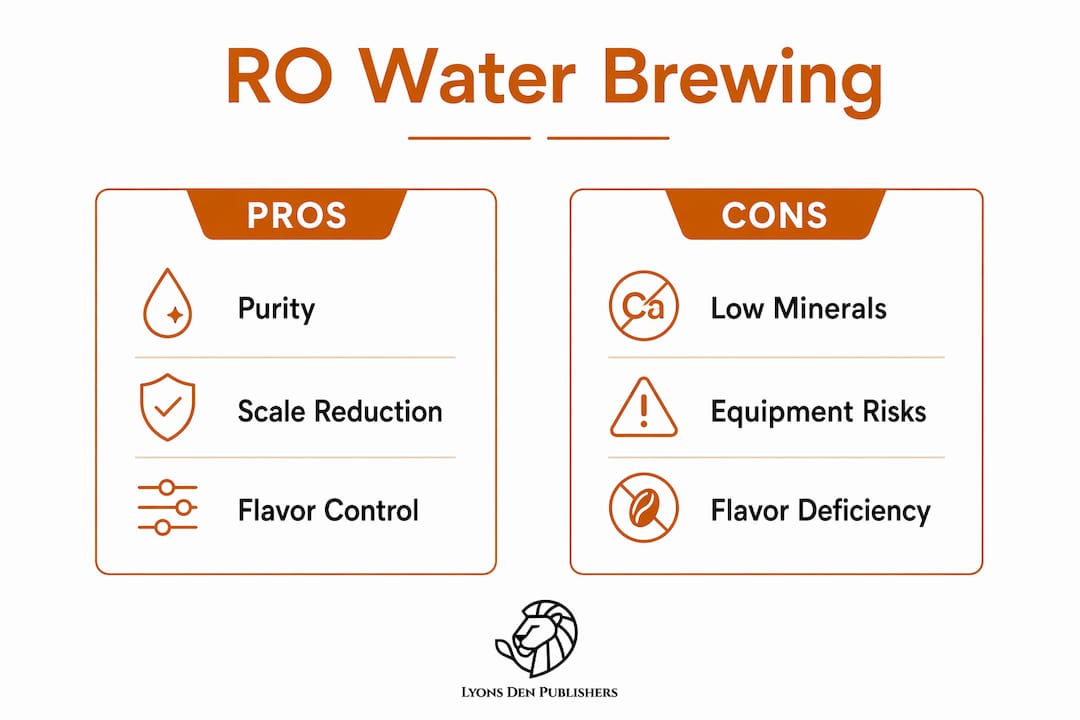
The SCA's recommended TDS window of 75–250 mg/L, with 150 mg/L as the target, reflects decades of sensory research. Plain RO water typically measures very low TDS, well below the recommended brewing range. That gap explains why pure RO water produces poor crema quality and unstable extraction in espresso: without dissolved minerals, the emulsified oils that form crema cannot stabilize, and the result is a thin, pale layer that collapses within seconds.
Why remineralization is essential and how to do it
Remineralization is not optional for RO water used in coffee. The goal is to reintroduce calcium, magnesium, and bicarbonate in controlled amounts, reaching an appropriate TDS range suitable for espresso and filter methods, without the chlorine, heavy metals, or inconsistent hardness that tap water carries.
Three practical remineralization methods
-
Mineral packets (such as Third Wave Water sachets): Pre-measured blends of calcium, magnesium, and bicarbonate salts dissolved into a gallon of RO water. Each sachet targets a specific brew style. The Espresso profile uses potassium bicarbonate rather than sodium chloride as its buffer, which matters because chlorides accelerate corrosion in boilers under heat and pressure. Dosing precision is critical: over-remineralization causes scale, while under-remineralization leaves extraction flat.
-
Blending valves: Built into many coffee-specific RO systems, these valves mix a controlled portion of unfiltered water back into the RO output. Turning the dial adjusts the mineral content upward. A TDS meter confirms the target range for espresso brewing. The advantage is automation: once set, every gallon exits at the same mineral level without manual dosing.
-
Remineralization cartridges: Inline calcite or magnesium cartridges that add minerals as water passes through. These are convenient but offer less precise control than mineral packets, and the mineral ratio shifts as the cartridge depletes.
Remineralization vs. blending with tap water
| Approach | Mineral Control | Contaminant Risk | Consistency |
|---|---|---|---|
| Controlled remineralization | High | Very low | Excellent |
| Blending with tap water | Moderate | Moderate (chlorine, variable hardness) | Seasonal variation |
| No remineralization | None | Low | Consistently poor |
Controlled remineralization is the preferred method. Blending with tap water introduces the same chlorine and variable hardness that RO was installed to remove. The mineral profile of municipal water also shifts seasonally, making it difficult to maintain a stable brew recipe year-round.

Pro Tip: Target a balanced mineral profile with appropriate TDS levels suited to the brewing method, ensuring optimal extraction and flavor development.
How untreated RO water damages coffee brewing equipment
The popular assumption that RO water protects espresso machines is only half correct. RO water does eliminate scale-forming calcium deposits. But straight RO water is slightly acidic and mineral-depleted, which makes it mildly corrosive to the brass, copper, and stainless steel components inside most machines.
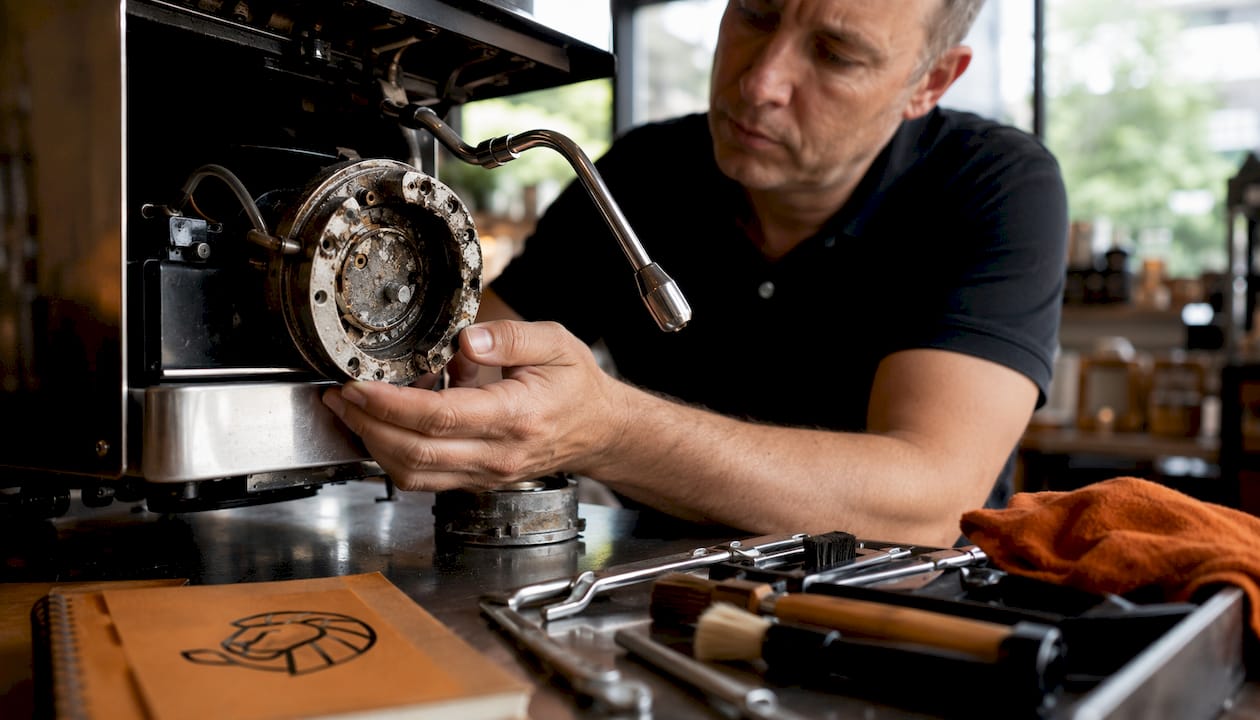
The corrosion mechanism is straightforward. Demineralized water is chemically "hungry" for ions. When it contacts metal surfaces in boilers, group heads, and piping, it leaches ions from those surfaces to reach equilibrium. Over time, this causes pitting and premature failure of seals, sensors, and heating elements. Pure RO water can void manufacturer warranties when damage is traced to water outside the specified chemistry range.
There is also an operational concern that catches many home brewers off guard. RO water's low electrical conductivity can trigger safety sensors in some espresso machines, preventing the machine from operating entirely. These sensors exist to protect components from corrosive water, and they interpret near-zero conductivity as a fault condition.
- Brass boiler fittings are particularly vulnerable to ion leaching from demineralized water
- Copper piping develops pitting that contaminates water and degrades flavor over time
- Stainless steel group heads can develop surface corrosion that affects flow dynamics
- Remineralized water at an appropriate TDS level restores conductivity, satisfies safety sensors, and reduces both scale and corrosion risk simultaneously
Pro Tip: Always check your espresso machine manufacturer's water specification before connecting an RO system, as they often specify a minimum TDS threshold. Remineralize to that range before the water reaches the machine.
What are the practical alternatives to RO water for home brewers?
RO with remineralization is not the only path to excellent coffee water. The right choice depends on your local tap water quality, brew method, and how much control you want over the final mineral profile.
Comparing water options for home coffee brewing
| Water Type | TDS Range | Chlorine | Mineral Control | Best For |
|---|---|---|---|---|
| RO + remineralization | 75–150 mg/L (target for espresso) | Removed | Full | Espresso, hard water areas |
| Bottled spring water (Volvic, Crystal Geyser) | 75–250 mg/L (typically within SCA range) | None | None (fixed) | All methods, easy setup |
| Carbon-filtered tap water | Varies by source | Removed | Low | Decent tap water, filter coffee |
| Unfiltered tap water | Highly variable | Present | None | Not recommended |
Bottled spring waters like Volvic and Crystal Geyser fall naturally within the ideal TDS range for espresso and filter brewing, making them a practical option for home brewers who want quality water without installing a system. The trade-off is ongoing cost and the inconvenience of carrying water by the gallon.
Carbon-filtered tap water removes chlorine and some organic compounds while leaving most minerals intact. If your municipal water already sits within 75–200 mg/L TDS and carries no off-flavors, a quality carbon filter may be all you need. Testing your tap water with an inexpensive TDS meter is the fastest way to find out.
- Test tap water TDS before investing in any filtration system
- If TDS exceeds 250 mg/L or falls below 75 mg/L, RO with remineralization gives the most consistent results
- For pour-over brewing, softer remineralized water lets origin character and floral notes express more clearly
- Carbon filtration alone suits most US cities with moderate, clean municipal water
RO with remineralization makes the most sense for home brewers in hard-water regions, espresso machine owners who want to protect their investment, and anyone who brews at a level where water consistency directly affects cup quality. For casual daily brewing with acceptable tap water, a carbon pitcher filter delivers a noticeable improvement at a fraction of the cost.
Expert best practices for using RO water in coffee
The guiding principle from the SCA and experienced coffee professionals is that stability matters more than purity. Water with a consistent, balanced mineral profile produces more repeatable extraction than ultra-pure water, even when that pure water is technically "cleaner."
For brewers building an RO setup from scratch, the most effective configuration places a pH-reducing or decarbonization pre-filter before the remineralization stage. This pre-filter lowers the water's carbonate hardness before minerals are added, which improves how completely the added minerals dissolve and prevents sediment from forming in the output line. The result is cleaner mineral dissolution and more predictable TDS readings.
Mineral targets differ by brew method. Espresso benefits from a tighter TDS range of 75–150 mg/L with higher alkalinity (around 80 mg/L as CaCO3) to buffer the acidity of concentrated extraction. Pour-over and drip methods tolerate slightly lower alkalinity and reward softer water profiles that let delicate origin notes come through. Matching the mineral profile to the roast level and brew method is where experienced home brewers gain a real advantage over simply "using filtered water."
Remineralization cartridges and mineral packets both deplete over time. Cartridges should be replaced on the manufacturer's schedule, not by taste alone, because mineral output drops gradually before any flavor change is noticeable. Mineral packets are more consistent because each sachet is a fixed dose, but they require a disciplined routine. A TDS meter, available for under $20, is the most practical tool for verifying that your remineralized water stays on target between cartridge changes.
One persistent misconception is that RO water is inherently safe for all equipment because it contains no scale-forming minerals. As covered earlier, the corrosion risk from untreated RO water is real and well-documented by machine manufacturers. Remineralization resolves both problems simultaneously: it restores the mineral balance needed for extraction and raises conductivity to a level that protects metal components and satisfies machine safety systems.
Key Takeaways
Remineralized RO water meets SCA brewing standards and protects equipment; untreated RO water harms both coffee flavor and machine components.
| Point | Details |
|---|---|
| RO water alone is insufficient | Plain RO water falls below the SCA minimum of 75 mg/L TDS, producing flat or harsh coffee. |
| Remineralization is required | Adding calcium, magnesium, and bicarbonate restores extraction chemistry and machine safety. |
| Equipment corrosion is a real risk | Untreated RO water leaches ions from brass and copper components, causing pitting and sensor failure. |
| Target TDS for espresso is 75–150 mg/L | Over-remineralization causes scale; under-remineralization leaves extraction flat and crema thin. |
| Simpler options exist for moderate tap water | Carbon filtration suffices when tap water TDS already falls within 75–200 mg/L with no off-flavors. |
Water is the ingredient most home brewers overlook, yet it determines more of what ends up in the cup than any brewing variable except the coffee itself. For brewers who want to go deeper on extraction science, water chemistry, and the full range of brewing methods, The Complete World of Coffee by Keith Lyons covers these topics with the same evidence-based rigor. Coffee bundles from Lyons Den Publishers pair the book with practical resources designed for home brewers who take their craft seriously.
Explore home brewing techniques that apply these water principles across every major brew method, from espresso to cold brew.